🔬 LIFE CYCLE

Clothes Moth Life Cycle

Tineola bisselliella · Lepidoptera

Understanding the clothes moth's full cycle from egg to adult explains why treatment must target larvae in the darkest corners — not just the moths you see flying.

📐 FIELD GUIDE ILLUSTRATION
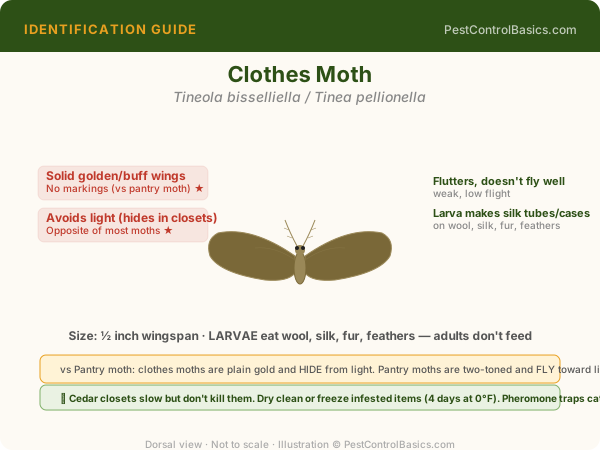
Clothes Moth (Tineola bisselliella) identification illustration with labeled anatomical features — PestControlBasics.com

Original illustration by PestControlBasics.com. Use anatomical labels above to confirm your identification.

🔄 Stages

🥚Egg
🐛Larva
🫘Pupa
🦋Adult
🥚
Egg
40-50 Eggs on Fabric
Females lay 40-50 tiny white eggs on or near natural fiber fabrics — wool, cashmere, silk, feathers. Eggs hatch in 4-10 days depending on temperature.
🐛
Larva
The Damaging Stage — 2-30 Months
Larvae are the ONLY stage that causes damage. Cream-colored, 1-10mm; spin silk webbing on fabric; feed continuously on natural fibers. Duration highly temperature-dependent: 2 months in warm conditions, up to 30 months in cold.
🫘
Pupa
2-4 Weeks in Silk Case
Larvae spin a silk case and pupate. Adults emerge in 2-4 weeks. Pupation can occur within fabric folds, in carpet, or in cracks.
🦋
Adult
1-3 Weeks — Adults Don't Feed
Adults live 1-3 weeks, don't feed (no mouthparts), and don't damage fabric. They avoid light, preferring dark closets.

🔬 Key Facts

🎯Treatment target: Larvae in dark undisturbed areas — not the adults you see flying
🌡️Temperature: Cool conditions dramatically extend larval development — infested items stored in unheated areas may have active larvae for years
🔍Male trap: Pheromone traps catch only males — they confirm presence but don't indicate severity

📅 Seasonality

Year-round indoors. Populations build slowly in undisturbed stored items. Infestations often not discovered until significant damage has occurred.

⏰ Treatment Window

Find and remove all infested sources (most critical). Freeze or dry clean affected items. Permethrin spray to closet surfaces. Pheromone trap placement for monitoring. Zero catches for 3+ consecutive weeks = elimination confirmed.

✅ Target the most vulnerable stage.

🎯 Life Cycle Stage × Treatment Effectiveness

Understanding life cycle stages allows you to target the most vulnerable period and plan follow-up treatments to catch individuals that survived as eggs or pupae.

StageDurationTreatment Approach
Egg/PupaVariableOften resistant to insecticides. Target adults and larvae while preventing egg-laying.
Larva/NymphVariableOften the most susceptible stage to IGRs and targeted treatments.
AdultVariablePrimary treatment target. Elimination of adults stops reproduction.

⏰ Why Timing and Follow-Up Matter

Most treatment failures happen because of two mistakes: treating only once, and treating only the visible population. Life cycles mean there are always individuals in a pesticide-resistant stage (eggs, pupae, or protected cases) that will emerge after your first treatment.

💡 Key principle: You're not treating today's population — you're breaking the reproductive cycle.

❓ Life Cycle FAQ

How does knowing the life cycle help me treat this pest?
Life cycle knowledge tells you which stages are present and which are vulnerable. Treating when only adults are present misses eggs that will hatch in days. Timing treatments to coincide with the vulnerable stages — and planning follow-ups for resistant stages — dramatically improves outcomes.
Why do pests come back even after a thorough treatment?
Eggs, pupae, and protected life stages (like cockroach egg cases) are resistant to most insecticides. They hatch or emerge after treatment and rebuild the population. The solution is scheduled follow-up treatments timed to catch each new cohort as it becomes vulnerable.
How long does a complete life cycle take?
Cycle duration varies by species and temperature — warmer temperatures accelerate all stages. At typical indoor temperatures (70°F), most common household pest cycles complete in 4–12 weeks. This is why 6-week treatment protocols are the standard minimum for most infestations.
Published: Jan 1, 2025 · Updated: Apr 7, 2026