🦟 Asian Tiger Mosquito

Aedes albopictus Β· Diptera: Culicidae

Asian tiger mosquitoes have changed the rules of mosquito control β€” they bite during the day, breed in bottle caps, and don't respond to dusk-focused adulticiding. New strategies are required.

MosquitoAsian TigerDay BiterDengueAedes40 States
🦟
Risk Level
Disease Vector β€” Day Biter
πŸ“ FIELD GUIDE ILLUSTRATION
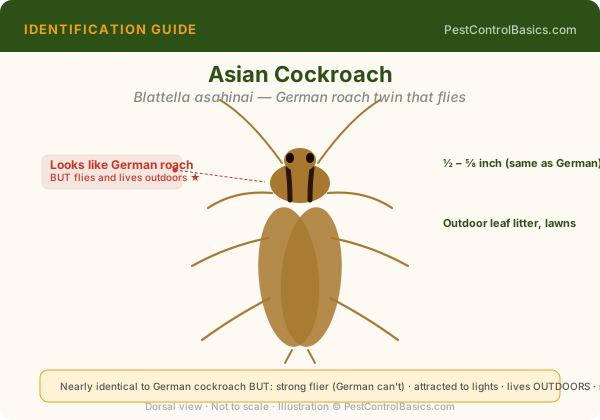
Asian Cockroach (Blattella asahinai) identification illustration with labeled anatomical features β€” PestControlBasics.com

Original illustration by PestControlBasics.com. Use anatomical labels above to confirm your identification.

πŸ“ FIELD GUIDE ILLUSTRATION
Mosquito (Culicidae family) identification illustration with labeled anatomical features β€” PestControlBasics.com

Original illustration by PestControlBasics.com. Use anatomical labels above to confirm your identification. For photo references, see the identification section below.

πŸ”¬
PestControlBasics Editorial Team
Reviewed by Derek Giordano Β· Updated 2026

πŸ” Identification

Adults: 5-8mm; jet black with distinctive white stripes on thorax, abdomen, and legs β€” the 'tiger' pattern is unmistakable and diagnostic. Bites during the day β€” peak activity mid-morning and late afternoon (unlike common mosquitoes which peak at dusk). Aggressive, persistent biter that will follow hosts indoors. Range: established in 40+ states from the East Coast to the Midwest and Pacific Coast states.

🧬 Biology & Behavior

Aedes albopictus was introduced to the US in the 1980s in used tire shipments. It breeds in any container holding even tiny amounts of water β€” bottle caps, tree holes, bromeliads, gutters. Container size requirements are dramatically smaller than Culex mosquitoes, making complete breeding site elimination more challenging. It transmits dengue, chikungunya, and Zika β€” local dengue transmission has occurred in Florida and Texas.

⚠️ Damage & Health Risk

Painful day-biting nuisance; dengue, chikungunya, and Zika transmission (local transmission documented in southern states); disruption of outdoor activity during daylight hours.

πŸ”§ DIY Treatment

Eliminate every water-holding container weekly (any container, even tiny). Apply Bti (Mosquito Bits) to any water that can't be eliminated. Apply bifenthrin barrier spray to dense vegetation in shaded areas where they rest. DEET or picaridin applied during daylight outdoor exposure. Permethrin-treated clothing provides excellent protection.

πŸ‘· When to Call a Pro

Professional ULV spray programs targeting resting sites β€” shaded vegetation, ornamentals β€” during daylight provide better control of Asian tiger mosquitoes than evening adulticiding aimed at Culex species.

❓ FAQ

Does normal mosquito control work on Asian tiger mosquitoes?
Evening adulticiding programs aimed at Culex mosquitoes are less effective on Asian tiger mosquitoes, which are most active during the day and rest in different microhabitats. Container breeding site elimination and daytime barrier spray on shaded vegetation targets this species more effectively. DEET and permethrin-treated clothing remain effective for personal protection.
Are Asian tiger mosquitoes the same as regular mosquitoes?
They're in the same family but behave very differently. Regular house mosquitoes (Culex) bite at dusk, breed in large stagnant water, and respond well to evening spray programs. Asian tiger mosquitoes bite during the day, breed in tiny containers, rest in shaded vegetation, and require different control approaches. The distinctive black-and-white stripe pattern is immediately diagnostic.
πŸ“š Sources: CDC Mosquito Control Β· EPA Repellent Search
Published: Jan 1, 2025 Β· Updated: Apr 7, 2026

πŸ—ΊοΈ US Distribution β€” Asian Tiger Mosquito

image/svg+xml
Common Occasional Not Present
States Present
51
Occasional
0
Primary Region
All 50 states
πŸ“Š Source: University extension services, USDA, CDC vector data, and published entomological surveys.