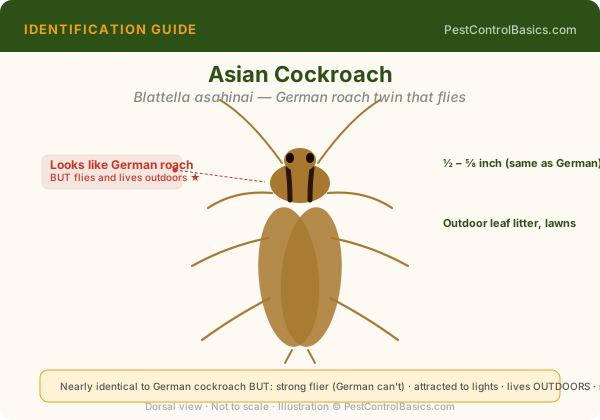
Original illustration by PestControlBasics.com. Use anatomical labels above to confirm your identification.

Original illustration by PestControlBasics.com. Use anatomical labels above to confirm your identification. For photo references, see the identification section below.
🔍 Identification
Adults: 5-8mm; jet black with distinctive white stripes on thorax, abdomen, and legs — the 'tiger' pattern is unmistakable and diagnostic. Bites during the day — peak activity mid-morning and late afternoon (unlike common mosquitoes which peak at dusk). Aggressive, persistent biter that will follow hosts indoors. Range: established in 40+ states from the East Coast to the Midwest and Pacific Coast states.
🧬 Biology & Behavior
Aedes albopictus was introduced to the US in the 1980s in used tire shipments. It breeds in any container holding even tiny amounts of water — bottle caps, tree holes, bromeliads, gutters. Container size requirements are dramatically smaller than Culex mosquitoes, making complete breeding site elimination more challenging. It transmits dengue, chikungunya, and Zika — local dengue transmission has occurred in Florida and Texas.
⚠️ Damage & Health Risk
Painful day-biting nuisance; dengue, chikungunya, and Zika transmission (local transmission documented in southern states); disruption of outdoor activity during daylight hours.
🔧 DIY Treatment
Eliminate every water-holding container weekly (any container, even tiny). Apply Bti (Mosquito Bits) to any water that can't be eliminated. Apply bifenthrin barrier spray to dense vegetation in shaded areas where they rest. DEET or picaridin applied during daylight outdoor exposure. Permethrin-treated clothing provides excellent protection.
👷 When to Call a Pro
Professional ULV spray programs targeting resting sites — shaded vegetation, ornamentals — during daylight provide better control of Asian tiger mosquitoes than evening adulticiding aimed at Culex species.