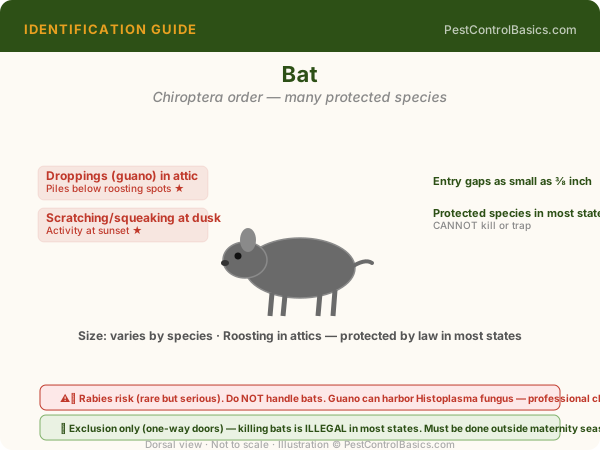
Original illustration by PestControlBasics.com. Use the labeled features above to confirm your identification.
🔍 Identification
Bat bugs: identical to bed bugs in appearance (same oval, flat, reddish-brown body, 4-5mm). The single distinguishing feature requires microscopy: bat bugs have longer hairs on the thorax fringe than bed bugs. Practical field ID: find the bat colony. If there's a bat colony in the attic or chimney, and people are getting bitten in bedrooms below, bat bugs are the likely culprit.
🧬 Biology & Behavior
Bat bugs live in bat colonies — they feed on bats as their primary host. When bats leave for winter or are excluded from a structure, bat bugs migrate downward seeking alternate hosts, eventually reaching sleeping humans. They can bite humans but cannot complete their life cycle without bat hosts — infestations don't self-sustain without bats.
⚠️ Damage & Health Risk
Bites indistinguishable from bed bug bites; persistent biting after apparent bat exclusion (bugs already in wall voids migrate to occupied spaces); psychological disturbance.
🔧 DIY Treatment
Step 1: Exclude the bat colony (bat exclusion must be done outside maternity season — typically May-August when pups can't fly). Step 2: Treat wall voids with residual insecticide (bifenthrin, CimeXa) after bat exclusion. Step 3: Treat bedroom areas as you would for bed bugs. Without bat exclusion, bat bugs return as bats return.
👷 When to Call a Pro
Bat exclusion requires a licensed wildlife professional — bats are federally protected. Combining bat exclusion with PCO treatment is the correct approach.