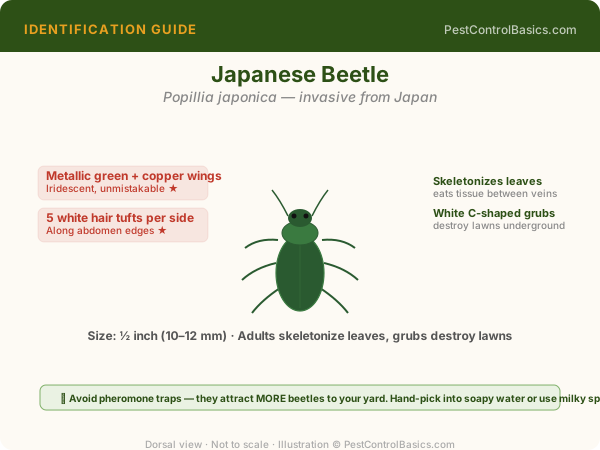
Original illustration by PestControlBasics.com. Use anatomical labels above to confirm your identification.
🔍 Identification
Adults: 2-3mm; brown-black; cylindrical; found feeding in crotches of elm twigs (feeding produces distinctive small branch dieback). Egg galleries: S-shaped or H-shaped galleries under elm bark — different species produce different gallery patterns. The disease: Ophiostoma ulmi fungus is carried on the beetle's body and transmitted to healthy elms as adults feed in twig crotches.
🧬 Biology & Behavior
Two species vector Dutch elm disease in the US: European elm bark beetle (introduced) and native elm bark beetle. Both adults feed on healthy elm twigs in spring — this feeding transmits Ophiostoma fungal spores to the tree's vascular system. The fungus then spreads through the water-conducting vessels, causing wilting and death. Removing diseased wood promptly is the most critical disease management action — diseased elms breed new beetles that carry higher fungal loads.
⚠️ Damage & Health Risk
Dutch elm disease kills individual trees and entire elm populations; loss of irreplaceable mature urban tree canopy; historical economic and aesthetic losses to American cities (most pre-1950 elm-lined streets are gone); ongoing losses of American elm in rural areas.
🔧 DIY Treatment
For individual high-value elms: injected fungicide (propiconazole/Arbotect or thiabendazole/Mauget) prevents new infections for 2-3 years. Remove and destroy (chip or burn) all dead or dying elm wood before adult beetle emergence in spring. Avoid pruning elms April-August when adults are flying. Sanitation logging is the most impactful community-level management.
👷 When to Call a Pro
Certified arborist injection with propiconazole (Arbotect 20-S) is the only effective treatment for preventing DED in high-value elms — must be applied before infection and repeated every 3 years.