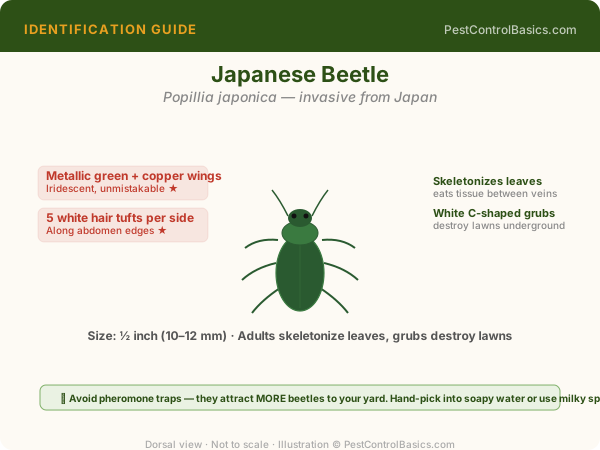
Original illustration by PestControlBasics.com. Use anatomical labels above to confirm your identification.
🔍 Identification
Adults: 1-3mm; metallic black, bronze, or striped depending on species; jump like fleas when disturbed (the behavior that gives them their name). Damage: hundreds of tiny round holes (shot holes) in leaves — like the leaf was peppered with BBs. Found on: brassicas (cabbage, broccoli, kale), eggplant, potatoes, tomatoes, corn. Most damaging in the 2-4 weeks after seedling emergence when plants are smallest.
🧬 Biology & Behavior
Adults overwinter in soil and leaf litter. They emerge in spring hungry and immediately attack seedlings. Larvae feed on roots underground (usually minor). Adults cause the visible leaf damage. The shot-hole pattern is completely distinctive — when you see hundreds of tiny round holes on brassica leaves and small black beetles that jump, flea beetles are confirmed.
⚠️ Damage & Health Risk
Complete seedling destruction in heavy infestations (24-48 hours possible); significant reduction in plant establishment; cosmetic damage on mature plants; stress predisposing plants to disease; economic losses in commercial brassica production.
🔧 DIY Treatment
Row cover installed at planting is the most effective and sustainable control — physically excludes beetles completely. Kaolin clay applied to seedlings deters feeding. Spinosad spray for active infestations. Diatomaceous earth around plant bases slows movement. Delay planting by 2-3 weeks when possible — seedlings that emerge when beetles are less active have better survival.
👷 When to Call a Pro
Commercial brassica production: systemic imidacloprid seed treatment or at-plant granules provides protection during the most vulnerable period.