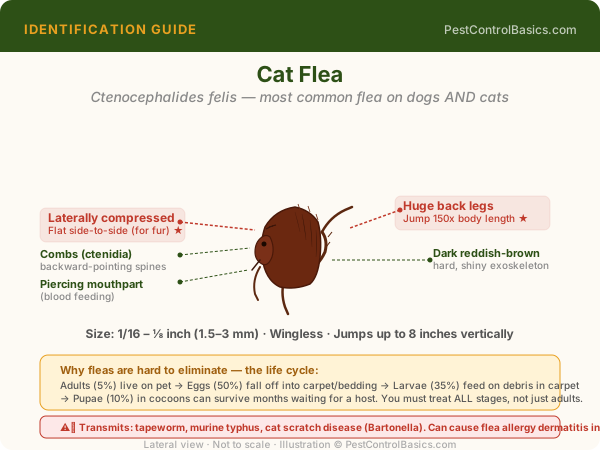
Illustrated identification guide — PestControlBasics.com
🔍 Identification
Cat Flea (C. felis): Elongated head; long genal comb (row of spines on cheek); 95%+ of US infestations on dogs, cats, and humans. Dog Flea (C. canis): More rounded head; slightly different comb pattern; actually rare in the US — most 'dog fleas' are cat fleas. Human Flea (Pulex irritans): No genal comb; found primarily in areas with pigs, dogs, and poor sanitation; uncommon in the US.
🧬 Biology & Behavior
All three are wingless, laterally compressed, and jump using enlarged hind legs. Definitive ID requires examining the genal (cheek) and pronotal (thorax edge) combs under a microscope. For practical purposes in the US: assume cat flea and treat accordingly — it's correct 95%+ of the time regardless of host species.
⚠️ Damage & Health Risk
Intense itching from bites; flea allergy dermatitis in sensitive animals; tapeworm (Dipylidium) transmission if fleas are ingested during grooming; cat scratch disease vector (Bartonella).
🔧 DIY Treatment
Same protocol for all three species: simultaneous pet + home + yard treatment with appropriate products. Species determination doesn't change the treatment approach.
👷 When to Call a Pro
Rarely warranted for species determination — cat flea protocol is appropriate for all common US flea infestations.