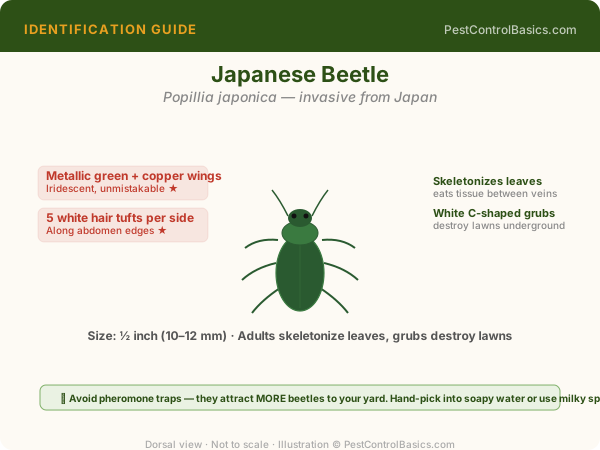
Original illustration by PestControlBasics.com. Use anatomical labels above to confirm your identification.
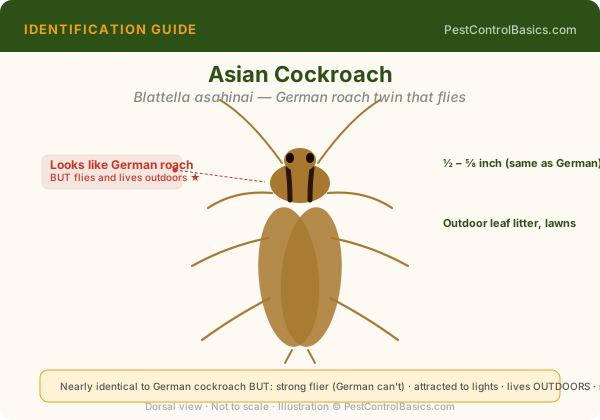
Original illustration by PestControlBasics.com. Use anatomical labels above to confirm your identification.
🔍 Identification
Adults: 5-8mm; highly variable — orange to red to nearly yellow; 0 to 19 black spots; highly variable between individuals. KEY ID FEATURE: distinctive M or W-shaped marking on the white pronotum (behind the head). This marking is present in all individuals and absent in all native lady beetle species. Also: more dome-shaped than native species.
🧬 Biology & Behavior
Introduced from Asia for agricultural pest control; escaped into the wild in the 1980s-90s; now distributed throughout the US and Canada. Uses aggregation pheromones to return to the same overwintering sites year after year. Prefers light-colored buildings on sun-facing aspects.
⚠️ Damage & Health Risk
Mass aggregation on south-facing walls in October; entry into structures through gaps; biting when handled or disturbed (unusual for lady beetles); yellow defensive fluid stains on surfaces; musty odor from aggregations in wall voids.
🔧 DIY Treatment
Same as other fall invaders: September bifenthrin perimeter spray, seal exterior gaps, caulk around windows and doors. Remove indoor individuals with vacuum rather than hands (to avoid the defensive bite and fluid).
👷 When to Call a Pro
For buildings with persistent severe invasions, professional October spray combined with targeted gap sealing is highly effective.