
Original illustration by PestControlBasics.com. Use anatomical labels above to confirm your identification.
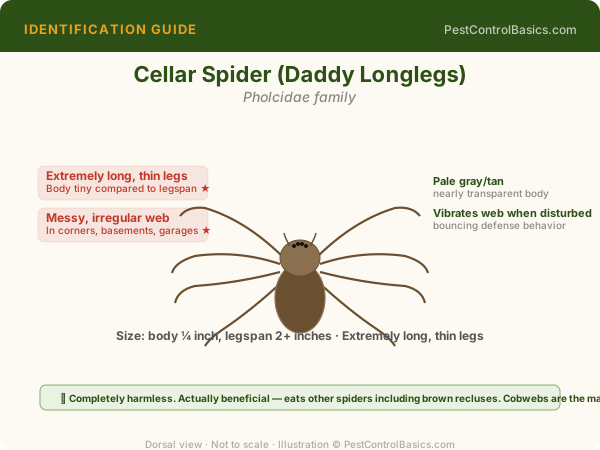
Original illustration by PestControlBasics.com. Use anatomical labels above to confirm your identification.
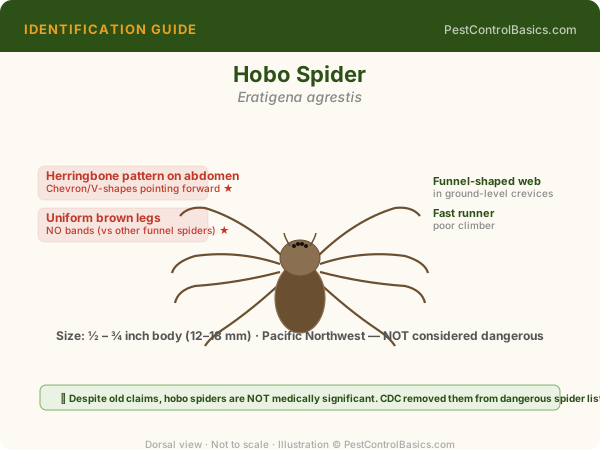
Original illustration by PestControlBasics.com. Use anatomical labels above to confirm your identification.
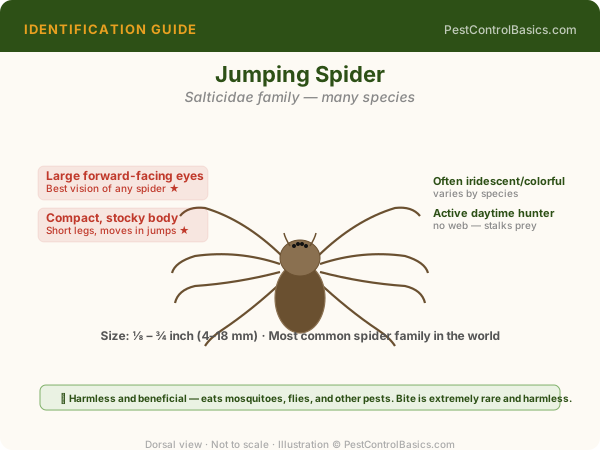
Original illustration by PestControlBasics.com. Use anatomical labels above to confirm your identification.
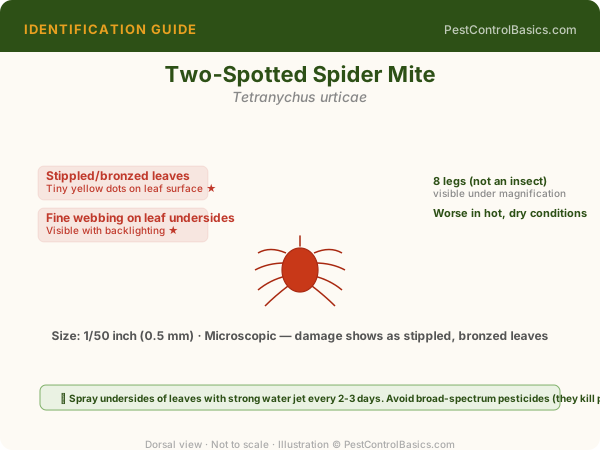
Original illustration by PestControlBasics.com. Use anatomical labels above to confirm your identification.
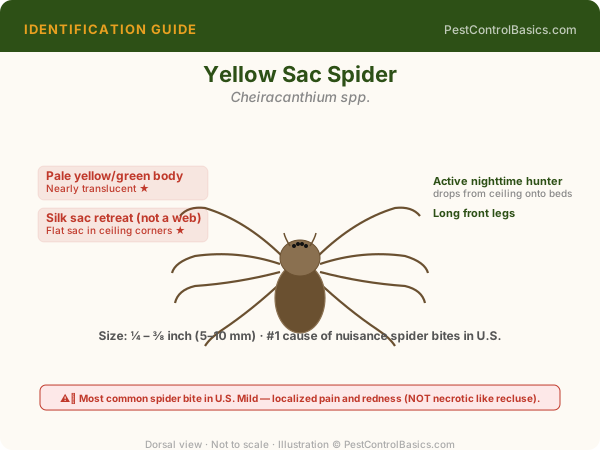
Original illustration by PestControlBasics.com. Use anatomical labels above to confirm your identification.
🔍 Identification Photo
Use this photo to confirm your identification. Click to enlarge.
Spider anatomy — 8 legs, 2 body regions, chelicerae (fangs), no antennae; these features distinguish all spiders from 6-legged insects
📷 Wikipedia / Wikimedia Commons / CC BY-SA⚠️ Photo loaded live from Wikipedia/Wikimedia Commons (CC BY-SA).
⚠️ Photos loaded from Wikipedia/Wikimedia Commons. Appearance varies by region, age, and sex.
Why every spray you've tried hasn't worked
When you spray a baseboard or perimeter with insecticide, it works on most insects because they groom themselves — licking their legs, cleaning their antennae — and in doing so, they ingest the chemical and die.
Spiders don't groom. They walk across a treated surface, their long legs barely touching it, and continue on their way completely unaffected. The spray that kills ants dead in their tracks does almost nothing to spiders.
The solution is desiccant dust — a powder that physically destroys the spider's waxy cuticle through direct physical contact. It doesn't need to be ingested. It clings to legs and body, causes dehydration through the exoskeleton, and kills the spider within hours. It's the one treatment method where the spider's grooming behavior doesn't matter.
- Spiders don't groom — no ingestion of chemical
- Long legs keep body away from treated surface
- Pyrethroids break down in UV within days outdoors
- Repellent effect simply redirects spiders indoors
- Does not affect egg sacs or juveniles in cracks
- Creates chemical resistance over time
- Physical kill — destroys waxy cuticle on contact
- No ingestion needed — affects legs and body equally
- Lasts years undisturbed in wall voids and cracks
- Zero chemical resistance possible (physical mechanism)
- Kills spiders in harborage where sprays never reach
- Also kills other insects — addresses food source
Know what you're dealing with
Most spiders found in U.S. homes are harmless and actually beneficial — they eat the insects you don't want. The two species that genuinely require action are the Brown Recluse and Black Widow. Here's how to tell the difference.
The desiccant protocol — step by step
Here is the complete treatment sequence for spider control. This is what works — not what most people do.
Spiders follow insects. If you have a lot of spiders, you have a lot of insects they're feeding on. Treating the underlying insect problem (gnats, flies, moths, silverfish) reduces spider activity more effectively than targeting spiders directly. Turn off or redirect exterior lights at night — lights attract flying insects, which attract spiders to build webs near your entry points.
For confirmed brown recluse infestations, add glue board traps throughout the affected area — under furniture, inside closets, behind appliances. Brown recluses are wanderers that travel at night. Glue boards serve as both monitoring and population reduction. In severe infestations, professional whole-room treatment with pyrethrin dust injection into wall voids is the most effective approach. Do not attempt to handle brown recluses — any compression against skin risks a bite.
Keep them out permanently
Reduce Outdoor Harborage
Move firewood at least 20 feet from the house and store it elevated off the ground. Remove leaf piles, mulch, and dense groundcover within 12 inches of the foundation. These provide ideal harborage for spiders and their prey alike.
Interior Decluttering
Brown recluses specifically prefer undisturbed clutter — stacked boxes, stored clothes, piles of papers. In affected areas, store items in sealed plastic bins rather than cardboard boxes. Shake out shoes and clothing stored in closets before wearing. Regular vacuuming in corners, under furniture, and along baseboards removes egg sacs and webs.
Exterior Lighting Strategy
Replace white exterior bulbs with yellow sodium vapor or warm LED bulbs — these attract significantly fewer flying insects, which reduces the spider food source near your home. Motion-activated lights are better than always-on lights for the same reason.
Annual Desiccant Application
A once-per-year application of CimeXa dust into wall voids, attic spaces, and crawlspaces creates a long-lasting barrier. Unlike sprays that break down within weeks, desiccant in enclosed voids lasts for years. This is the closest thing to a "set it and forget it" spider treatment that actually works.