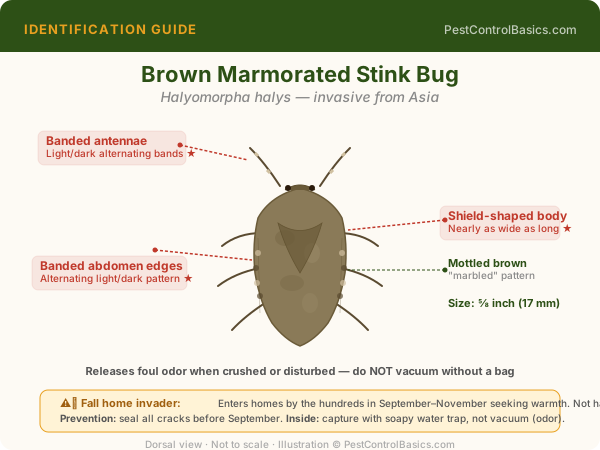
Original illustration by PestControlBasics.com. Use anatomical labels above to confirm your identification.
🔍 Identification Photo
Use this photo to confirm your identification. Click to enlarge.
Brown marmorated stink bug (Halyomorpha halys) — mottled brown shield shape with alternating banding on abdomen edge; never crush them indoors
📷 Wikipedia / Wikimedia Commons / CC BY-SA⚠️ Photo loaded live from Wikipedia/Wikimedia Commons (CC BY-SA).
⚠️ Photos loaded from Wikipedia/Wikimedia Commons. Appearance varies by region, age, and sex.
Why they show up every fall — like clockwork
The Brown Marmorated Stink Bug arrived in Allentown, Pennsylvania from East Asia around 1996 — likely in shipping containers. Without the parasitic wasps that control them in Asia, their population expanded explosively. They now occur in 40+ states and are established in most of the eastern U.S., with expanding populations in the Pacific Northwest and California.
What triggers the fall invasion is straightforward: dropping temperatures cause them to enter "diapause" — a dormant overwintering state. They seek warm, protected spaces to wait out winter. Your home, particularly warm sunny sides and attic spaces, is ideal. They release aggregation pheromones that attract other stink bugs to the same overwintering sites — which is why the same homes see repeated invasions year after year.
Squishing a stink bug releases two things: the pungent odor (which smells like coriander or cilantro) and aggregation pheromones that actively signal to other stink bugs that this is a good overwintering site. You will attract more. Use a jar, bag, or vacuum to capture and remove them without crushing. Flush down a toilet or release outside — far from the structure.
All stink bug exclusion work must be completed by late August — before the first cold nights trigger migration toward structures. By September, they are actively seeking entry. Sealing in October doesn't stop the invasion; it just traps some already inside. August is your window.
Seal every gap before September
Insecticides provide limited help against stink bugs — they move quickly and contact time with treated surfaces is brief. Exclusion is the only effective strategy. Use this checklist every August.
When they're already inside — remove without releasing odor
The Vacuum Method — Best Indoor Removal
Vacuum stink bugs up with a shop vac or regular vacuum. Important: empty the vacuum immediately into a sealed bag placed outside. Stink bugs in a vacuum bag will release odor into your home through the motor exhaust. A stocking over the vacuum nozzle can trap bugs before they reach the bag — remove the stocking and seal it in a bag outdoors.
The Jar Method — For Individual Bugs
Place a glass jar or zip-lock bag over the bug (don't touch it), slide a piece of paper underneath, and capture it. Seal and dispose outside. Drop into soapy water — the detergent breaks surface tension and they drown quickly without releasing odor.
Soapy Water Trap
A shallow container of soapy water placed under a desk lamp (the only light source in a dark room) attracts stink bugs overnight. They fly toward the light, fall into the water, and drown. Effective for reducing indoor populations without contact or squishing.
There is no indoor pesticide treatment that effectively controls stink bugs already inside. Sprays kill individuals on contact but do not provide meaningful residual control for a species that's constantly re-entering. Indoor pesticide application for stink bugs is not recommended — exclusion and manual removal are the only effective indoor strategies.