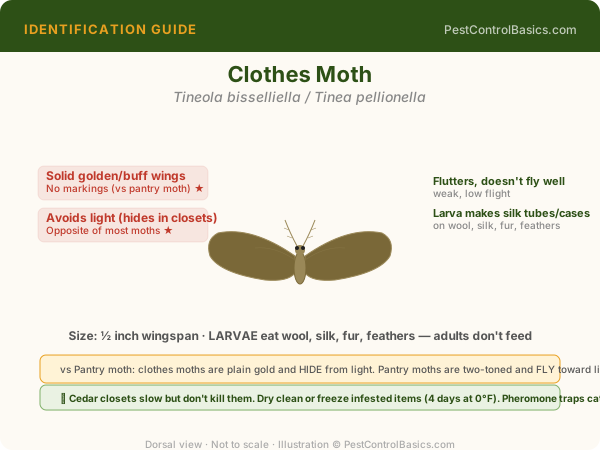
Original illustration by PestControlBasics.com. Use anatomical labels above to confirm your identification.
🔍 Identification
Adults: 12-16mm wingspan; uniformly buff/golden with no markings; weak flyers; immediately hide when disturbed; NEVER fly to lights (opposite of food moths). Larvae: 6-10mm; creamy white with brown head; produces flat silk webbing on and around food source. Damage: irregular holes in natural fibers with characteristic flat silk webbing around the edges.
🧬 Biology & Behavior
Females lay 40-50 tiny white eggs on natural fiber fabrics — wool, cashmere, silk, angora, fur, feathers. Larvae hatch and immediately begin feeding and producing webbing. Complete development: 2-6 months in warm conditions, up to 2 years in cold. Adults live 1-3 weeks; adult females don't feed. Life cycle entirely dependent on natural protein fibers — they cannot develop on synthetic fabrics.
⚠️ Damage & Health Risk
Holes in wool, cashmere, silk, fur, and feather-filled items; silk webbing on damaged fabrics; loss of irreplaceable or high-value garments; museum collection damage.
🔧 DIY Treatment
Monitor with pheromone traps (catches males, confirms presence). Inspect all natural fiber items thoroughly — including unlikely sources like piano felts and natural fiber rugs. Freeze confirmed items (0°F, 72 hours). Dry-clean high-value items. Permethrin spray to storage surfaces. Store in airtight sealed bags.
👷 When to Call a Pro
Rarely warranted — the protocol can be completed effectively by homeowners with the right approach.