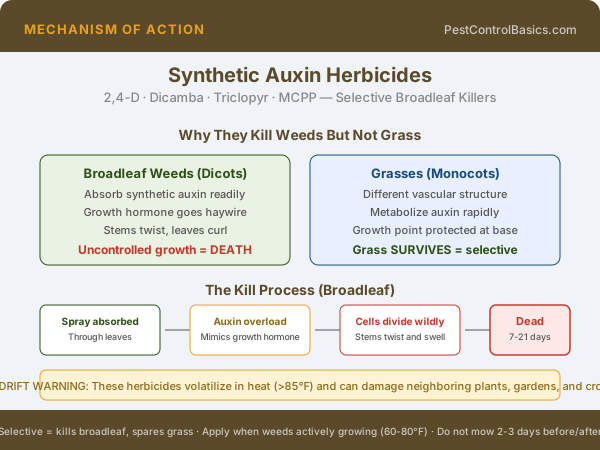
How herbicide auxin works — illustrated mechanism of action
2,4-D is the most widely used selective herbicide for broadleaf weed control in lawns. It kills dandelions, clover, plantain, and other broadleaf weeds while leaving grass unharmed. Developed during WWII and registered in 1945, it remains the backbone of lawn weed control 80 years later.
How herbicide auxin works — illustrated mechanism of action
Broadleaf weeds in lawns: dandelions, clover, plantain, chickweed, henbit, ground ivy (creeping charlie), wild violets, spurge, oxalis, thistle, dollarweed. Does NOT kill grasses (selective). Also does not control crabgrass, nutsedge, or other grass-type weeds.
Weed B Gon (Ortho - the most popular consumer brand), Trimec (combo with dicamba + MCPP), Triplet, Speed Zone, Gordon Amine 400, Hi-Yield 2,4-D, Southern Ag Amine 2,4-D, many store brand lawn weed killers. Almost all broadleaf lawn herbicides contain 2,4-D as a primary ingredient.
Moderate toxicity. Skin and eye irritant. Keep children and pets off treated lawn until dry (typically 2-4 hours, or after next watering/rain). Apply when wind is calm to prevent drift to gardens and ornamentals.
When to apply: Best results when weeds are actively growing (spring and fall). Daytime temperatures of 60-80F are ideal. Do not apply during drought stress or extreme heat. Do not mow for 2-3 days before or after application (weeds need leaf surface to absorb herbicide).
Spot treatment vs broadcast: For a few scattered weeds, spot-spray with a pump sprayer. For widespread weed pressure, broadcast with a hose-end sprayer. Spot treatment uses dramatically less herbicide and is better for the environment.
The clover question: 2,4-D kills clover, which many modern homeowners WANT in their lawn (nitrogen fixation, pollinator habitat). If you want to keep clover, use targeted spot treatment on just the weeds you do not want, or consider whether a clover-inclusive lawn is right for you.
Combination products: Most consumer lawn herbicides combine 2,4-D with dicamba and MCPP/MCPA for broader weed spectrum. These three-way mixes are more effective than 2,4-D alone and are the standard for professional lawn care.