🧪 Active Ingredient Profile
Methoprene (Precor) — IGR for Flea & Stored Product Control
Insect Growth Regulator (Juvenile Hormone Analog) · CAS 40596-69-8
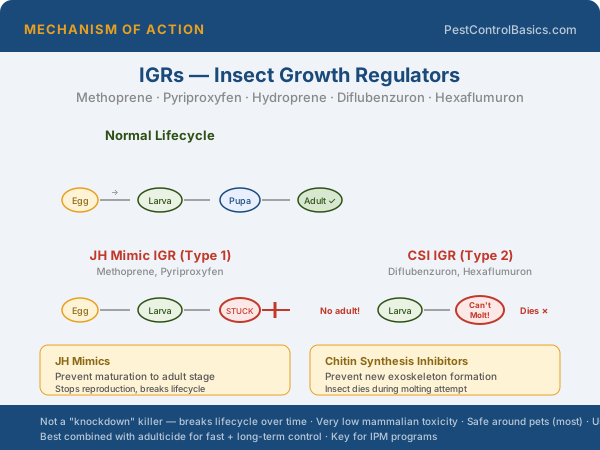
Methoprene is an insect growth regulator (IGR) that prevents flea larvae from maturing to the adult stage. It's one of the safest and most important tools in flea management — and equally valuable for stored product pest programs.
Mode of Action
Mimics juvenile hormone — prevents larvae from completing development to the adult stage; no direct toxicity to adults
🦺 Personal Protective Equipment (PPE)
Required PPE varies by formulation and application method. Always read the product
label — the label is the law and overrides general guidance.
- Standard gloves
- Low toxicity — minimal PPE required
- Safe around mammals — targets only juvenile insect hormones
⚠️ Label compliance: The product label is a legal document under FIFRA.
Applying any pesticide in a manner inconsistent with its label is a federal violation.
📋 Application Best Practices
- Read the full label before each use — formulations change and label requirements may differ from previous products you've used.
- Apply at the right rate — more is not more effective. Over-application wastes product, creates unnecessary exposure, and is illegal.
- Target harborage and entry points, not just visible pest activity. Treating where pests hide is more effective than treating where you see them.
- Record the application — note the product, rate, area treated, and date. Required for commercial applications; best practice for homeowners.
- Ventilate the treatment area after application and before re-entry.
💡 Storage: Store in original container, away from children, in a cool dry location. Never transfer to food or beverage containers. Check local regulations for disposal — most areas have household hazardous waste collection events.
❓ Frequently Asked Questions
How do I know which concentration to buy?
Consumer (RTU/concentrate) products are formulated for homeowner application rates. Professional-grade concentrates require accurate dilution — mistakes in either direction reduce effectiveness or create safety hazards. If you're new to pesticide application, start with ready-to-use formulations and work up to concentrates once you understand mixing and rates.
Can I mix this with other pesticides?
Tank mixing is common in professional applications but requires compatibility testing and label compliance. Never mix pesticides unless both labels permit it. One safe and effective combination: pair an adulticide with an IGR — they attack different life stages and don't interfere with each other.
How long does the treatment remain effective?
Residual activity depends on formulation, surface, UV exposure, and temperature. Micro-encapsulated formulations last longest (4–12 weeks). Wettable powders and emulsifiable concentrates typically last 2–6 weeks outdoors. Indoor applications on non-porous surfaces can persist significantly longer.
Is this product safe for use around pets and children?
All pesticides have some level of toxicity — 'safe' means used correctly according to the label. Keep children and pets out of treated areas until completely dry (minimum 2–4 hours for most sprays). For households with infants or chemically sensitive individuals, discuss low-exposure options (baits, dusts, IGRs) with a pest management professional.