🔍 Identification Guide

Carpenter Bee vs. Bumblebee — Fast ID Guide

These two large bees look nearly identical in flight — but one bores damaging tunnels in your wood and the other is a harmless (and important) pollinator. One key feature settles it instantly.

🐝
Carpenter Bee
Smooth, shiny black abdomen
VS
🐝
Bumblebee
Fuzzy, yellow-hairy abdomen
📐 FIELD GUIDE ILLUSTRATION
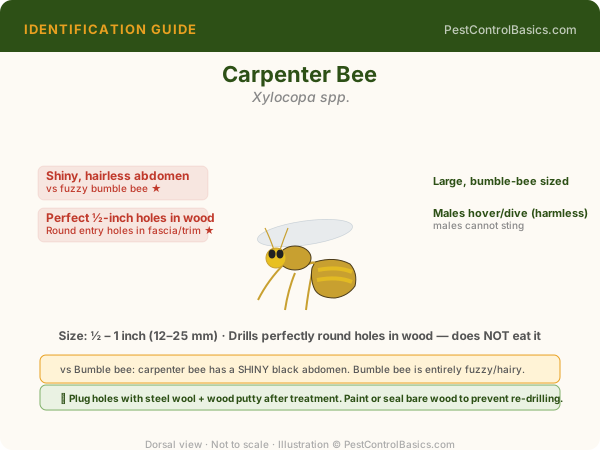
Carpenter Bee (Xylocopa spp.) identification illustration with labeled anatomical features — PestControlBasics.com

Original illustration by PestControlBasics.com. Use anatomical labels above to confirm your identification.

📊 Side-by-Side Comparison

FeatureCarpenter BeeBumblebee
AbdomenShiny, smooth, uniformly blackFuzzy, hairy, yellow and black banded
ThoraxYellow hair on thoraxYellow and black banded throughout body
Size22-28mm; robust15-25mm; similar size but stouter
NestBores 1/2-inch circular holes in woodNests underground or in existing cavities; no wood damage
Males sting?Male cannot sting (no stinger); females rarely stingBoth males and workers can sting; females more defensive
BehaviorMales hover aggressively near nest entranceGround-foraging; not defensive unless directly threatening nest
BenefitPollinator (but less effective than bumblebee)Important native pollinator; should be protected

🔑 Key Differences

The abdomen solves it instantly
Look at the abdomen: carpenter bee = shiny, smooth, black. Bumblebee = fuzzy, hairy, yellow-banded. This single check identifies the species with 100% accuracy.
Male carpenter bees cannot sting
The male carpenter bee hovers aggressively near the nest — all threat, no capability. Males have no stinger. The defensive hovering is purely bluff.
Never treat bumblebees
Bumblebees are important native pollinators that should be protected, not exterminated. If you have a ground nest in an inconvenient location, wait until fall when the colony naturally dies and seal the cavity.

⚠️ Which Is More Urgent?

Carpenter bees cause real structural damage worth treating — especially if the same locations are used year after year. Bumblebees are harmless, beneficial, and should never be treated. If you have the fuzzy-abdomen species in a wall void, call a beekeeper, not an exterminator.

📊 Side-by-Side Comparison

FeatureKey DifferencesWhy It Matters
AppearanceStudy the body shape, coloration, and size carefullyMisidentification leads to wrong treatment product
BehaviorTime of day active, movement pattern, reaction when disturbedBehavioral clues often confirm when appearance is unclear
Location foundWhere in your home or yard the pest appearsLocation narrows down species dramatically
Damage/signsWhat evidence each species leaves behindSecondary evidence often confirms ID without seeing the pest
UrgencyHealth risk and structural damage potential differ significantlyDetermines how fast you need to act

🔧 Getting the Treatment Right

Correct identification before treatment is essential — using the wrong product or approach wastes time and can mask the real problem. If you cannot confidently identify the pest from the comparison above, a professional inspection is the fastest path to the right answer.

💡 Capture method: Place a clear plastic cup over the pest and slide a card underneath to trap it. A photo submitted to your local cooperative extension service can get you a free expert ID.

❓ Identification FAQ

What's the fastest way to confirm which pest I have?
Capture a live or dead specimen and compare it directly against the identification features in this guide. A clear close-up photo submitted to your county's cooperative extension service will get you a free expert identification within 1–3 business days. iNaturalist is also excellent for invertebrate ID.
Can I treat for both at the same time?
If you're unsure which pest you have, it's often more effective to wait for confirmation rather than applying multiple treatments. Misapplied pesticides can scatter populations without eliminating them. The exception: if both pests require identical treatment (as with many fall invaders), treating once covers both.