🔬 Biology & Life Cycle

Japanese Beetle Life Cycle

Popillia japonica · Coleoptera

Japanese beetles complete one generation per year — but their two destructive stages (lawn-damaging grubs and plant-feeding adults) require different treatment windows.

📐 FIELD GUIDE ILLUSTRATION
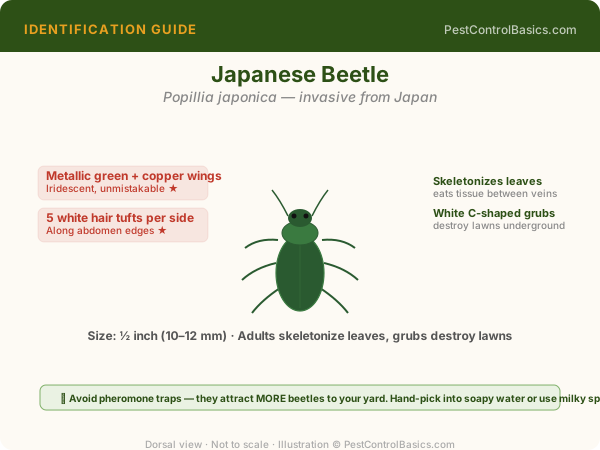
Japanese Beetle (Popillia japonica) identification illustration with labeled anatomical features — PestControlBasics.com

Original illustration by PestControlBasics.com. Use anatomical labels above to confirm your identification.

🔄 Life Cycle Overview

🥚
Egg
🐛
Grub
🫘
Pupa
🪲
Adult
🥚
Egg
Eggs in Turf — 300 Per Female
Females leave feeding sites daily to lay eggs in turf. Each female lays 40-60 eggs over 6-8 weeks. Eggs are laid 2-4 inches deep in moist soil of lawns and turfgrass.
('40-60 eggs/female', '2-4 inches deep in turf', 'Prefer moist, irrigated lawns')
🐛
Grub
White Grub — Root-Feeding Stage
C-shaped white grubs feed on grass roots from August through spring. Three instars over 10 months. 3rd instar grubs overwinter 4-10 inches deep, rising to feed again in spring.
('3 instars', '10 months in soil', 'Overwinter deep; rise in spring')
🫘
Pupa
Pupa — 2 Weeks in Soil
Pupation occurs 2-4 inches deep in May-June. Adult emerges and tunnels to surface.
('2 weeks', 'May-June', 'Surface emergence June-July')
🪲
Adult
Adult — Peak Damage July-August
Adults feed in aggregations on 300+ plant species for 6-8 weeks. Return to turf daily to lay eggs. The aggregation pheromone + plant volatiles attract more beetles.
('6-8 week adult season', '300+ host plants', 'Aggregation feeding')

🔬 Key Biology Facts

⏱️Grub treatment window: Late June to mid-July for newly hatched 1st-2nd instar grubs — most susceptible and near surface.
🦟Adult season: Mid-June through August in most US states; peaks in July.
🌡️Temperature trigger: Adults emerge when soil temperature reaches ~60°F — typically late June in northern states, early June in southern.

📅 Seasonal Activity

One generation per year. Eggs: July. Grubs: August-October (active feeding), November-March (deep dormancy), April-May (resumed feeding). Adults: June-August.

⏰ Treatment Timing

Grubs: apply chlorantraniliprole (Acelepryn, Grub-X Prevent) in late June-July; imidacloprid in May-June as preventive. Adults: hand-pick in morning; pyrethroid spray for severe infestations; avoid pheromone traps (attract more beetles).

✅ Target the most vulnerable life stage for maximum treatment effectiveness.

🎯 Life Cycle Stage × Treatment Effectiveness

Understanding life cycle stages allows you to target the most vulnerable period and plan follow-up treatments to catch individuals that survived as eggs or pupae.

StageDurationTreatment Approach
Egg/PupaVariableOften resistant to insecticides. Target adults and larvae while preventing egg-laying.
Larva/NymphVariableOften the most susceptible stage to IGRs and targeted treatments.
AdultVariablePrimary treatment target. Elimination of adults stops reproduction.

⏰ Why Timing and Follow-Up Matter

Most treatment failures happen because of two mistakes: treating only once, and treating only the visible population. Life cycles mean there are always individuals in a pesticide-resistant stage (eggs, pupae, or protected cases) that will emerge after your first treatment.

💡 Key principle: You're not treating today's population — you're breaking the reproductive cycle.

❓ Life Cycle FAQ

How does knowing the life cycle help me treat this pest?
Life cycle knowledge tells you which stages are present and which are vulnerable. Treating when only adults are present misses eggs that will hatch in days. Timing treatments to coincide with the vulnerable stages — and planning follow-ups for resistant stages — dramatically improves outcomes.
Why do pests come back even after a thorough treatment?
Eggs, pupae, and protected life stages (like cockroach egg cases) are resistant to most insecticides. They hatch or emerge after treatment and rebuild the population. The solution is scheduled follow-up treatments timed to catch each new cohort as it becomes vulnerable.
How long does a complete life cycle take?
Cycle duration varies by species and temperature — warmer temperatures accelerate all stages. At typical indoor temperatures (70°F), most common household pest cycles complete in 4–12 weeks. This is why 6-week treatment protocols are the standard minimum for most infestations.
📚 Sources: USDA Japanese Beetle · Purdue Extension
Published: Jan 1, 2025 · Updated: Apr 7, 2026