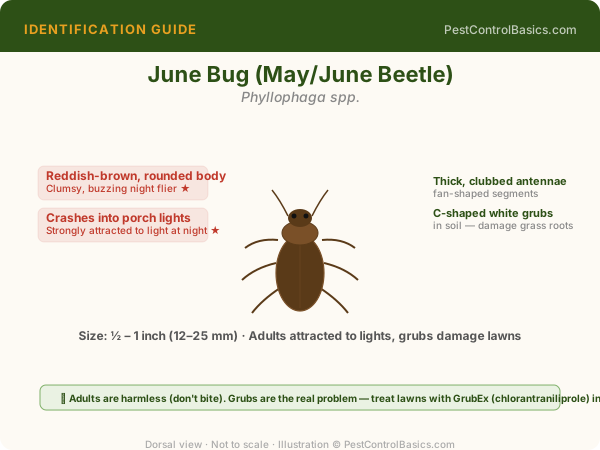
Original illustration by PestControlBasics.com. Use the labeled features above to confirm your identification.
🔍 Identification
Adults: 15-25mm; oval; uniformly chestnut brown to reddish-brown; no metallic sheen; clumsily fly into lights at night. Very common at porch and street lights late May through July. Larvae (grubs): C-shaped white grubs, 25-35mm; found 2-4 inches deep in soil; identical to other white grubs requiring microscopic examination to distinguish by species.
🧬 Biology & Behavior
Adults are attracted to lights at night and feed minimally on tree foliage. Females lay eggs in turf; larvae feed on grass roots for 2-3 years before pupating. June bug grubs are one of the most common white grub species in the northern US and Canada, overlapping with Japanese beetle grub pressure.
⚠️ Damage & Health Risk
Adult: cosmetic leaf feeding on oak, elm, and other trees; nuisance light attraction at buildings. Larvae: root feeding causing lawn damage patches that peel from soil; bird digging in lawn seeking grubs.
🔧 DIY Treatment
Adults: reduce exterior lighting intensity or switch to yellow bulbs. Larvae: apply chlorantraniliprole (Acelepryn) preventively in June-July; imidacloprid in May. Milky spore disease for long-term biological control. May require 2-3 year cycle treatment due to multi-year larval development.
👷 When to Call a Pro
For large lawn areas with severe annual grub damage, professional soil treatment provides better coverage.