🔬 LIFE CYCLE

Greenhouse Whitefly Life Cycle

Trialeurodes vaporariorum · Hemiptera

Whitefly populations build rapidly because all life stages are present simultaneously on plants — eggs, nymphs, and adults at once. This layered population structure is why single treatments fail.

📐 FIELD GUIDE ILLUSTRATION
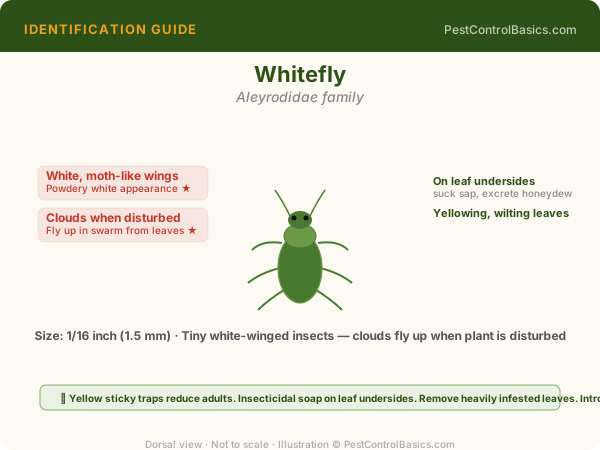
Whitefly (Aleyrodidae) identification illustration with labeled anatomical features — PestControlBasics.com

Original illustration by PestControlBasics.com. Use anatomical labels above to confirm your identification.

🔄 Stages

🥚Egg
🐛Nymph
🦋Adult
🥚
Egg
7-10 Days
Females lay 150-300 eggs on leaf undersides, often in circular patterns. Eggs are tiny, white, pear-shaped, attached by a short stalk.
🐛
Nymph
4 Instars Over 2-3 Weeks
N1 (crawler): mobile, disperses briefly then settles. N2-N3: sessile, scale-like, flat. N4 (pupa): raised, waxy, transparent — forms the characteristic 'puparium' visible on leaf undersides.
🦋
Adult
1-3 Weeks
White powdery wings held flat over body. Adults feed, mate, and lay eggs simultaneously. Multiple generations overlap continuously on infested plants.

🔬 Key Facts

🔄Overlapping generations: All stages present simultaneously — treating only adults leaves eggs and nymphs to replenish the population within days
💊Resistance development: Bemisia tabaci biotype B has documented resistance to every insecticide class used against it in some populations
🧫Virus vector: Bemisia transmits 100+ plant viruses — transmission occurs within 30 seconds of feeding, before any insecticide can act

📅 Seasonality

Year-round on greenhouse and indoor plants. Populations peak in warm, dry conditions. Outdoor populations in warm climates.

⏰ Treatment Window

Biological control: Encarsia formosa parasitoid wasps introduced at first sign of infestation. Chemical: rotate spirotetramat (nymph) → insecticidal soap (all stages) → azadirachtin. Yellow sticky traps for adult monitoring. Never use same product class twice in sequence.

✅ Target the most vulnerable stage.

🎯 Life Cycle Stage × Treatment Effectiveness

Understanding life cycle stages allows you to target the most vulnerable period and plan follow-up treatments to catch individuals that survived as eggs or pupae.

StageDurationTreatment Approach
Egg/PupaVariableOften resistant to insecticides. Target adults and larvae while preventing egg-laying.
Larva/NymphVariableOften the most susceptible stage to IGRs and targeted treatments.
AdultVariablePrimary treatment target. Elimination of adults stops reproduction.

⏰ Why Timing and Follow-Up Matter

Most treatment failures happen because of two mistakes: treating only once, and treating only the visible population. Life cycles mean there are always individuals in a pesticide-resistant stage (eggs, pupae, or protected cases) that will emerge after your first treatment.

💡 Key principle: You're not treating today's population — you're breaking the reproductive cycle.

❓ Life Cycle FAQ

How does knowing the life cycle help me treat this pest?
Life cycle knowledge tells you which stages are present and which are vulnerable. Treating when only adults are present misses eggs that will hatch in days. Timing treatments to coincide with the vulnerable stages — and planning follow-ups for resistant stages — dramatically improves outcomes.
Why do pests come back even after a thorough treatment?
Eggs, pupae, and protected life stages (like cockroach egg cases) are resistant to most insecticides. They hatch or emerge after treatment and rebuild the population. The solution is scheduled follow-up treatments timed to catch each new cohort as it becomes vulnerable.
How long does a complete life cycle take?
Cycle duration varies by species and temperature — warmer temperatures accelerate all stages. At typical indoor temperatures (70°F), most common household pest cycles complete in 4–12 weeks. This is why 6-week treatment protocols are the standard minimum for most infestations.
Published: Jan 1, 2025 · Updated: Apr 7, 2026