πŸ› Whitefly β€” Species Guide & Control

Trialeurodes vaporariorum / Bemisia tabaci Β· Hemiptera: Aleyrodidae

Whiteflies are the houseplant and greenhouse pest most likely to become insecticide-resistant. The resistance issue makes them one of the hardest plant pests to manage long-term.

HemipteraAleyrodidaePlant PestResistanceGreenhouseVirus Vector
πŸ›
Risk Level
Plant Pest
πŸ“ FIELD GUIDE ILLUSTRATION
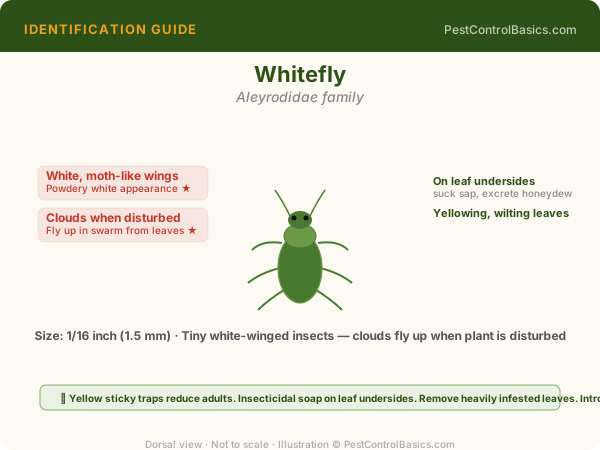
Whitefly (Aleyrodidae) identification illustration with labeled anatomical features β€” PestControlBasics.com

Original illustration by PestControlBasics.com. Use anatomical labels above to confirm your identification.

πŸ”¬
PestControlBasics Editorial Team
Reviewed by Derek Giordano Β· Updated 2026

πŸ” Identification

Adults: 1-2mm; white powdery wings; triangular when at rest; cloud up from infested plants when disturbed. Found in dense colonies on leaf undersides.

Greenhouse whitefly (T. vaporariorum): Oval nymphs; rounds; common in temperate regions.

Silverleaf/Sweetpotato whitefly (Bemisia tabaci): More oval/pointed nymphs; more angled resting position; transmitted 100+ plant viruses including tomato yellow leaf curl, squash silverleaf, and cassava mosaic disease worldwide.

🧬 Biology & Behavior

All life stages (egg, 4 nymphal instars, adult) occur simultaneously on plants. Life cycle: 3-4 weeks at room temperature; 2 weeks in summer heat. Resistance develops rapidly β€” Bemisia biotype B has documented resistance to all major insecticide classes after repeated exposure.

⚠️ Damage & Health Risk

Direct plant damage from sap removal; honeydew and sooty mold; virus transmission (Bemisia is arguably the most economically important agricultural virus vector globally); reduced ornamental quality.

πŸ”§ DIY Treatment

Biological control (Encarsia formosa parasitoid, Eretmocerus mundus): most sustainable approach for greenhouses β€” commercially available. Yellow sticky traps for monitoring + adults. Insecticidal soap and neem oil (contact only; must hit nymphs). Spirotetramat (Kontos) β€” systemic; excellent nymph control. Rotate all insecticides β€” resistance develops within 3-5 generations.

πŸ‘· When to Call a Pro

Commercial greenhouse operations should work with an integrated pest management advisor to design rotation programs that maintain effective tools long-term.

❓ FAQ

Why do whiteflies keep coming back after I spray?
Almost certainly insecticide resistance. If you've used the same product (or same class) repeatedly, surviving resistant individuals dominate. Switch to a completely different mode of action β€” biological control (Encarsia), insecticidal soap, or spirotetramat β€” and never return to the same product.
Can I use neem oil to kill whiteflies?
Neem oil is moderately effective against young nymphs when applied to leaf undersides. It's not highly effective against adults or later nymphal stages. It works best as part of a rotation program combined with other modes of action.

πŸ—ΊοΈ Geographic Range & Distribution

FactorDetails
U.S. RangeAll or most U.S. states
Regional DetailDistribution varies β€” consult your local extension service for regional prevalence data.

πŸ“… Treatment Timing Guide

Treating at the right time dramatically improves results. Pest control timed to the life cycle uses less product and achieves better long-term control.

PeriodAction
SpringInspection and perimeter treatment before pest season starts.
SummerActive monitoring and targeted treatments as needed.
FallPreventive treatment before overwintering pests seek entry.

πŸ’° Professional Treatment Costs

Service TypeDIY CostProfessional Cost
Initial inspectionFree (self-inspect)$75–$150 (often credited to treatment)
One-time treatment$30–$100 in materials$150–$500
Annual service contractN/A$400–$900/year
Severe infestationOften ineffective alone$500–$2,500+

Prices vary by region, property size, and infestation severity.

❓ Common Questions About πŸ› Whitefly β€” Species Guide & Control

How do I confirm I actually have this pest (not something similar)?
The most reliable confirmation is a physical specimen β€” capture one and compare to reference images on this page. For cryptic pests (bed bugs, termites), look for secondary signs: frass, shed skins, mud tubes, or bites with a specific pattern. When uncertain, a professional inspection is faster than months of misidentification.
Can I treat this myself or do I need a professional?
DIY is effective for small, accessible infestations caught early. Professionals are worth the cost when: the infestation is inside wall voids or structural elements, multiple rooms are affected, you have health-risk pests (hantavirus, venomous species), or DIY has already failed twice.
How long until the infestation is completely gone?
Expect 3–8 weeks for most infestations with proper treatment. Insects with dormant life stages (pupae, eggs) extend the timeline because those stages are impervious to most insecticides. Follow-up treatments at 2 and 4 weeks catch each new cohort as they emerge.
What's the most common mistake people make treating this pest?
Treating only the visible pest population while ignoring the harborage site, entry point, or breeding location. Killing adults provides temporary relief but the population rebuilds from hidden egg cases, pupae, or new arrivals through unaddressed entry points.
πŸ“š Sources: EPA Termite Guide Β· NPMA Termite Info
Published: Jan 1, 2025 Β· Updated: Apr 7, 2026

πŸ—ΊοΈ US Distribution β€” Whitefly

image/svg+xml
Common Occasional Not Present
States Present
49
Occasional
2
Primary Region
Continental US
πŸ“Š Source: University extension services, USDA, CDC vector data, and published entomological surveys.