🐛 Black Bean Aphid

Aphis fabae · Hemiptera: Aphididae

Black bean aphids form dense black colonies on bean stems and beet leaves that look alarming but are actually easier to control than most aphid species.

AphidBlack BeanVegetableHemipteraAphididaeAnt Farming
🐛
Risk Level
Vegetable Garden Pest
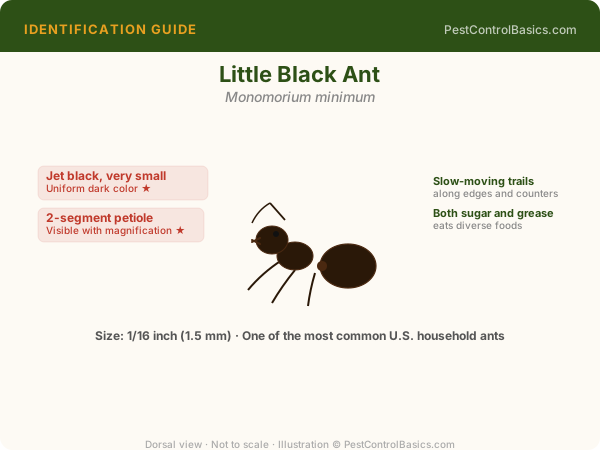
📐 FIELD GUIDE ILLUSTRATION
Little Black Ant (Monomorium minimum) identification illustration with labeled anatomical features — PestControlBasics.com

Original illustration by PestControlBasics.com. Use anatomical labels above to confirm your identification.

🔬
PestControlBasics Editorial Team
Reviewed by Derek Giordano · Updated 2026

🔍 Identification

1-3mm; jet black (distinctive — no other common aphid is this color on these hosts); soft-bodied; antenna visible; colonies form dense black masses on stems and leaf undersides. Found on: beans (especially broad beans and climbing beans), beets, chard, dahlias, nasturtiums, and various ornamentals. Winged forms appear in summer dispersal. Overwintering eggs on spindle tree (Euonymus europaeus) in the UK; overwinters as eggs on viburnum in the US.

🧬 Biology & Behavior

Black bean aphids are attended by ants — ants protect the aphid colony from predators in exchange for honeydew. If ants are present on infested plants, disrupting ant access (tanglefoot around plant stems) allows natural predators (ladybugs, lacewings) to control the aphids. The colonies grow rapidly in warm weather but are also effectively controlled by insecticidal soap if ant interference is removed.

⚠️ Damage & Health Risk

Leaf curl and distortion; stunted plant growth; honeydew on leaf surfaces leading to sooty mold growth; pod damage in beans; stem die-back in heavy infestations.

🔧 DIY Treatment

Remove ants first (tanglefoot banding on stems) to allow natural enemies access. Strong water spray dislodges colonies. Insecticidal soap (2-3% solution) applied to colonies. Neem oil spray. For large infestations: spinosad or pyrethrin spray directly on colonies.

👷 When to Call a Pro

Beneficial insect conservation (avoid broad-spectrum sprays near aphid colonies) allows natural predator populations to develop and provide sustained biological control.

❓ FAQ

Why are there ants all over my bean plants?
Ants are farming the black bean aphids — they protect the aphid colony from predators and parasitic wasps in exchange for honeydew (the sugar-rich aphid excretion). The ants are not the primary problem — they're secondary to the aphid infestation. Stopping ant access with tanglefoot or diatomaceous earth barriers around plant stems removes aphid protection and allows natural enemies to control the colony.
Do black bean aphids spread plant viruses?
Yes — black bean aphids are vectors of multiple plant viruses including bean common mosaic virus (BCMV) and beet yellows virus (BYV). Virus transmission occurs within seconds of aphid probing — even dead aphids can transmit viruses before they die. Controlling aphid populations early limits virus spread.
📚 Sources: UC IPM Aphids · EPA Safe Pest Control
Published: Jan 1, 2025 · Updated: Apr 7, 2026

🗺️ US Distribution — Black Bean Aphid

image/svg+xml
Common Occasional Not Present
States Present
49
Occasional
2
Primary Region
All agricultural regions
📊 Source: University extension services, USDA, CDC vector data, and published entomological surveys.