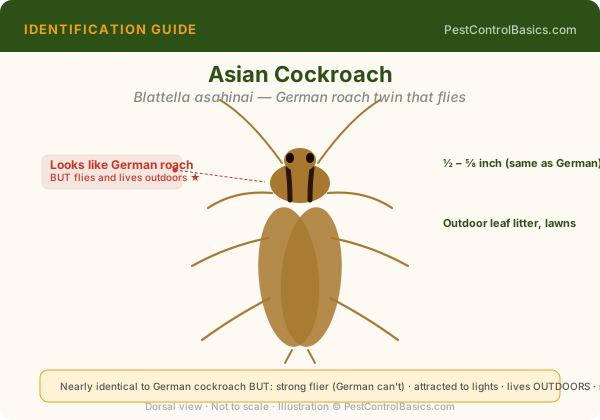
Original illustration by PestControlBasics.com. Use anatomical labels above to confirm your identification.
🔍 Identification
Adults: 3-4mm; mottled brown; hold wings tent-like at 45° angle when at rest (diagnostic); waxy white tubular deposits on new growth (nymph feeding). Nymphs: yellow-green; found on new citrus shoots; surrounded by white waxy filaments. Feeding: on new growth (flush) only — the pest depends on citrus flushing (new growth episodes).
🧬 Biology & Behavior
Asian citrus psyllid vectors Candidatus Liberibacter asiaticus — the bacterium causing citrus greening (HLB). Once a tree is infected, the disease progresses inexorably — no cure exists. Infected trees produce bitter, misshapen fruit (greening pattern), eventually declining and dying. Florida has lost over 90% of its commercial citrus since HLB arrived in 2005. California detected ACP in 2008 and HLB in 2012 — aggressive quarantine programs have slowed but not stopped spread.
⚠️ Damage & Health Risk
Citrus greening (HLB) — no cure; fatal to all citrus species; severe economic losses to commercial citrus; loss of backyard citrus trees.
🔧 DIY Treatment
Report any suspected psyllid sightings to USDA APHIS or state department of agriculture. Imidacloprid soil drench provides systemic protection that kills psyllids feeding on treated trees. Do not move citrus plants, budwood, or cuttings out of quarantine areas. Thermotherapy (heat treatment) is being researched as a potential HLB cure.
👷 When to Call a Pro
Professional application of systemic insecticides in high-pressure areas. USDA-coordinated biological control with Tamarixia radiata parasitoid wasp.