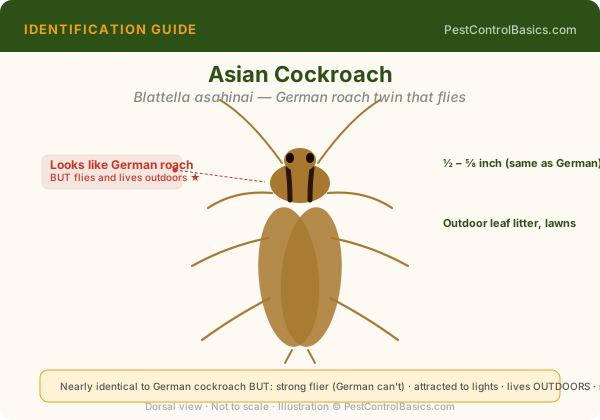
Original illustration by PestControlBasics.com. Use anatomical labels above to confirm your identification.
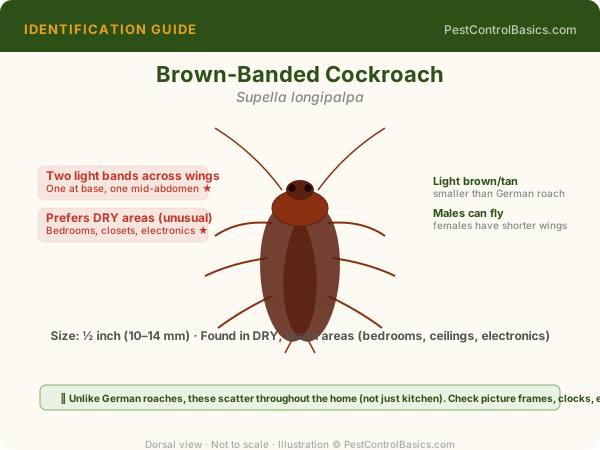
Original illustration by PestControlBasics.com. Use anatomical labels above to confirm your identification.
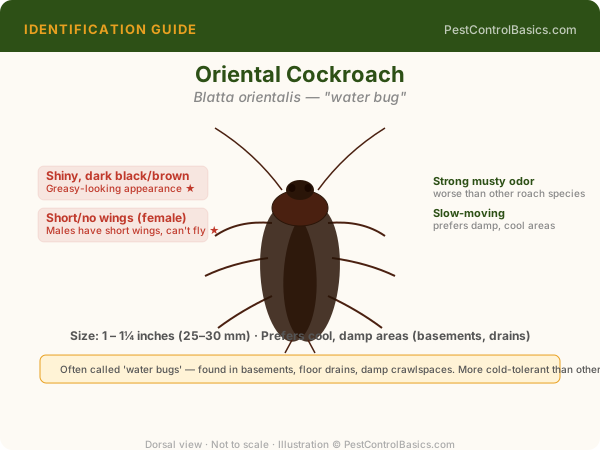
Original illustration by PestControlBasics.com. Use anatomical labels above to confirm your identification.
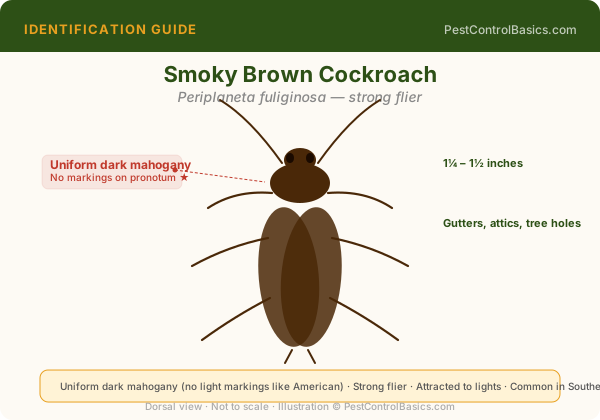
Original illustration by PestControlBasics.com. Use anatomical labels above to confirm your identification.
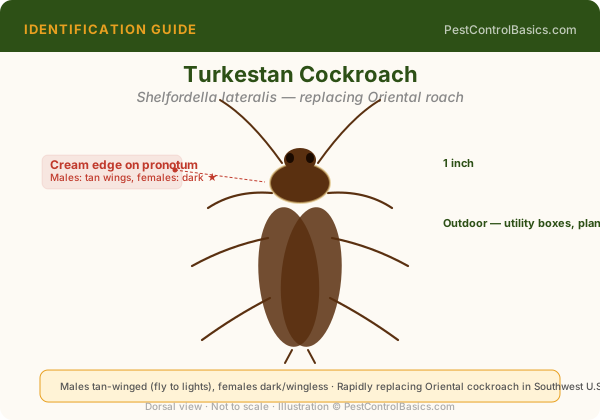
Original illustration by PestControlBasics.com. Use anatomical labels above to confirm your identification.
🔍 Identification Photo
Use this photo to confirm your identification. Click to enlarge. Correct ID is the essential first step to effective treatment.
Asian cockroach (Blattella asahinai) — nearly identical to German cockroach visually; key difference: Asian roach flies toward lights; German does not
📷 Wikipedia / Wikimedia Commons / CC BY-SA⚠️ Photo loaded live from Wikipedia/Wikimedia Commons (CC BY-SA). Appearance varies by region, age, and sex. When uncertain, contact a licensed pest professional.
The critical difference — it flies
Asian cockroaches are so similar to German cockroaches that even entomologists require microscopic examination to definitively distinguish them. The practical field test is simple: does it fly?
German cockroaches have wings but almost never fly. Asian cockroaches fly readily and are strongly attracted to light — they will fly toward a flashlight, fly into lit rooms through open windows, and fly toward porch lights at night.
Habitat is the second clue: German cockroaches are indoor-only. They don't survive well outdoors. Asian cockroaches live outdoors in leaf litter, mulch, and compost. If you find a "German cockroach" outside in a Florida garden, it's almost certainly an Asian cockroach.
Why the distinction matters: German cockroach infestation = gel bait focus indoors. Asian cockroach = perimeter spray and light management outdoors. Using gel bait alone for Asian cockroaches does nothing because they aren't establishing colonies inside.
Outdoor treatment and light management
Asian cockroaches don't establish indoor colonies — they enter buildings at night attracted to interior lights and return outdoors. Control focuses on preventing entry and killing outdoor populations.
Replace white exterior lights: Switch porch, garage, and exterior lights to yellow LEDs (2700K) or sodium vapor lights. Asian cockroaches are strongly attracted to cool-white and daylight spectrum lights.
Bifenthrin perimeter spray: Apply to mulched areas adjacent to the structure, lawn edges near the foundation, and around all exterior light fixtures. Kills cockroaches approaching the structure before they enter.
Bait in outdoor beds: Cockroach gel bait placed in outdoor garden bed areas reduces the outdoor population over several weeks.
Door and window seals: Check all exterior door and window seals — Asian cockroaches that are attracted will enter through any gap.