HomePest LibraryBald-Faced Hornet
⚠ Extreme Aggression — Professional Often Needed
🐝

Bald-Faced Hornet

Dolichovespula maculata

Despite the name, bald-faced "hornets" are actually large yellow jackets. They build enclosed, papery, football-shaped nests in trees, shrubs, and on structures — and will aggressively defend them with multiple stings from large distances. Among the most dangerous stinging insects encountered in residential settings.

Actual speciesYellow jacket (Vespula group) — not true hornet
Nest typeLarge enclosed papery — football to basketball size
AggressionExtreme — attacks from 10+ feet if disturbed
Colony sizeUp to 700 workers by late summer
TreatmentNight only; professional for nests larger than fist
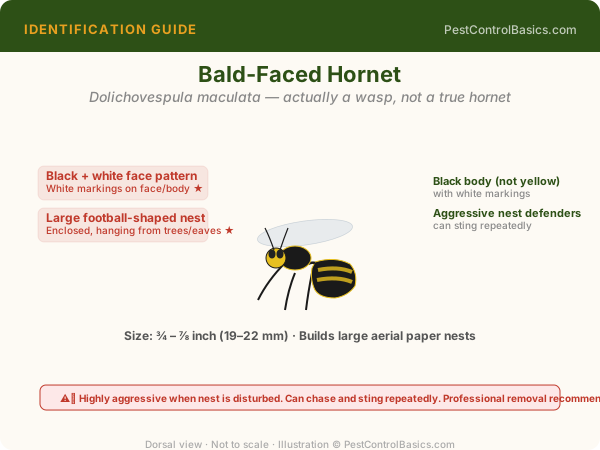
📐 FIELD GUIDE ILLUSTRATION
Bald Faced Hornet (Dolichovespula maculata) identification illustration with labeled anatomical features — PestControlBasics.com

Original illustration by PestControlBasics.com. Use anatomical labels above to confirm your identification.

🔍 Identification Photo

Use this photo to confirm your identification. Click to enlarge. Correct ID is the essential first step to effective treatment.

Bald-faced hornet (Dolichovespula maculata) — black with white face markings; enclosed football-shaped nest; technically

Bald-faced hornet (Dolichovespula maculata) — black with white face markings; enclosed football-shaped nest; technically a yellow jacket species

📷 Wikipedia / Wikimedia Commons / CC BY-SA

⚠️ Photo loaded live from Wikipedia/Wikimedia Commons (CC BY-SA). Appearance varies by region, age, and sex. When uncertain, contact a licensed pest professional.

Identification

Not a true hornet — more aggressive than most

Bald-faced "hornets" are technically in the yellow jacket genus (Dolichovespula) rather than the true hornet genus (Vespa). The one true hornet in the U.S. is the European hornet (Vespa crabro), which is larger and less aggressive than the bald-faced hornet despite being the genuine article taxonomically.

Appearance: Black body with white or ivory markings on the face (the "bald" reference), thorax, and abdomen. About 3/4 inch — larger than standard yellow jackets. The face is distinctively white/ivory on a black head — no other common U.S. wasp looks like this.

Nest identification: Bald-faced hornet nests are large enclosed structures made of chewed wood pulp — gray, papery, with a striped appearance from multiple layers of material. They are typically football-shaped when small and can reach basketball size or larger by late summer. They hang from trees, shrubs, eaves, and occasionally fences or overhangs. The single entrance hole is at the bottom of the nest.

Treatment

Night-only protocol and when to call a pro

Size matters for DIY decisions: A nest that is fist-sized or smaller in an accessible, non-traffic location can reasonably be treated with DIY jet aerosol at night. A basketball-sized nest in a tree near a doorway, or any nest in a location that requires approaching within 10 feet before spraying, warrants professional treatment.

Nighttime jet aerosol protocol: Use a pyrethroid-based jet aerosol (Spectracide Wasp and Hornet, Raid Wasp and Hornet) that sprays 15–20 feet. Approach slowly, upwind, with a red flashlight. Soak the entrance hole at the bottom of the nest with a 3–5 second burst. Back away immediately. Do not run — sudden movement triggers pursuit. Return in 24 hours to verify no activity before removing the nest.

Why bald-faced hornets are especially dangerous: Unlike yellow jackets whose nests are often underground or hidden in structural voids, bald-faced hornet nests are often in open locations near human traffic. Workers will attack targets that approach or vibrate the nest from 10+ feet away — farther than most people expect. Mowing beneath a tree with an attached nest is a documented cause of serious multiple-sting incidents.

⚠ Call a Professional for Large Nests

Any bald-faced hornet nest larger than a softball, located in a high-traffic area, or above 6 feet warrants professional treatment. Licensed pest control professionals have the PPE and equipment to treat these nests safely. The cost is small relative to the risk of a serious sting incident.

Quick Reference
ColorBlack and white/ivory face markings
Size3/4 inch — larger than yellow jackets
NestEnclosed papery — gray, striped layers
LocationTrees, shrubs, eaves, corners of structures
AggressionExtreme — multiple stings from significant distance
Colony size400–700 workers by August
SeasonMay (start) through October (colony dies)
Treatment timingNight only — full colony inside
AI Bug Identifier →Find a Pro →
📚 Sources: EPA Stinging Insects
Published: Jan 1, 2025 · Updated: Apr 7, 2026
Bald-Faced Hornet
Bald-Faced Hornet

Frequently Asked Questions

How do I know if I have Bald-Faced Hornet?

Signs of Bald-Faced Hornet include physical sightings, droppings or frass, damage to food or materials, and unusual odors. Inspect hidden areas like wall voids, behind appliances, and in storage spaces. A flashlight inspection after dark is often most revealing.

Are Bald-Faced Hornet dangerous to humans or pets?

Bald-Faced Hornet can pose health risks including bites, allergic reactions, food contamination, and disease transmission. Children, elderly, and pets are especially vulnerable. Consult a pest management professional when an infestation is confirmed.

Can I eliminate Bald-Faced Hornet myself?

Light infestations may be manageable with DIY baits, traps, and targeted treatments. Established infestations typically require professional intervention. Misapplied products often scatter pests and worsen the problem long-term.

How long does Bald-Faced Hornet treatment take?

Timelines vary by infestation size and method. Baits may take 1–4 weeks to work through a colony. Chemical treatments often require 2–3 applications spaced 2–4 weeks apart. Monitor for 30–60 days after treatment to confirm elimination.

What attracts Bald-Faced Hornet to my home?

Bald-Faced Hornet are typically drawn by food sources, standing moisture, warmth, and shelter. Sealing entry points, reducing clutter, fixing leaks, and storing food in airtight containers are the most effective long-term prevention measures.

Related Resources

📚 Full Pest Library🧪 DIY vs. Pro Quiz💰 Cost Guide🌿 IPM Guide🔍 Find a Pro
🧪 Recommended Treatment Products
Pyrethrin Aerosol Lambda-Cyhalothrin Safety & PPE Guide
Full product guides with mixing rates and safety info. → Browse All 130 Pesticide Guides
🔮
Reviewed by Derek GiordanoContent on PestControlBasics.com is developed with input from certified pest management professionals and cross-referenced against EPA, CDC, and university extension guidance. Last reviewed: April 2026.

🗺️ US Distribution — Bald-Faced Hornet

image/svg+xml
Common Occasional Not Present
States Present
49
Occasional
2
Primary Region
Continental US
📊 Source: University extension services, USDA, CDC vector data, and published entomological surveys.