🐝 Bald-Faced Hornet

Dolichovespula maculata Β· Hymenoptera: Vespidae

The bald-faced hornet is not a true hornet β€” it's a large yellow jacket species that builds the iconic large grey paper nests in trees. Despite the 'hornet' name, its colony biology and aggression level are all yellow jacket.

WaspAggressiveStingerHymenopteraAerial NestPaper Nest
🐝
Risk Level
Aggressive Stinger
πŸ“ FIELD GUIDE ILLUSTRATION
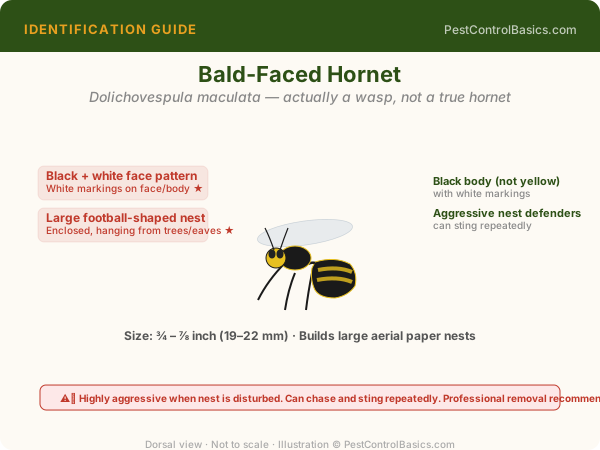
Bald Faced Hornet (Dolichovespula maculata) identification illustration with labeled anatomical features β€” PestControlBasics.com

Original illustration by PestControlBasics.com. Use anatomical labels above to confirm your identification.

πŸ”¬
PestControlBasics Editorial Team
Reviewed by Derek Giordano Β· Updated 2026

πŸ” Identification

Adults: 15-20mm; black body with distinctive white (not yellow) facial markings and white markings on the thorax and abdomen tip. Colonial β€” workers, queens, reproductives. Nests: large (up to 24 inches), football to basketball shaped, grey paper, suspended from trees, shrubs, and building overhangs. Entirely enclosed except for a single entrance hole at the bottom.

🧬 Biology & Behavior

Annual colony like all yellow jackets β€” starts with a single overwintered queen in spring, reaches maximum colony size of 400-700 workers in late summer, collapses at first hard frost. The large enclosed paper nest insulates and protects the colony through temperature extremes.

⚠️ Damage & Health Risk

Extremely aggressive in defense of the nest β€” will attack in large numbers with minimal provocation within 3-5 feet of the nest. Multiple stings from many workers simultaneously. Both workers and reproductives can sting repeatedly (unlike honey bees). This is the most dangerous stinging insect to encounter in its nesting territory.

πŸ”§ DIY Treatment

Treat at night with a jet wasp spray (long-range aerosol) directed into the entrance hole at the bottom of the nest. Stand back 10+ feet. Wait 5 minutes; retreat if activity continues. This is one situation where professional treatment is strongly recommended due to the colony size and aggression.

πŸ‘· When to Call a Pro

Strongly recommended for any nest within 10 feet of a frequently used area. A licensed PCO has access to faster-acting products and appropriate PPE.

❓ FAQ

Can you remove a bald-faced hornet nest in winter?
Yes β€” the colony dies at first frost and the nest is abandoned. Empty nests in winter can be safely removed without any protective equipment. The same nest is never re-used, but queens sometimes return to build new nests in the same tree.
What's the difference between a bald-faced hornet and a yellow jacket?
Bald-faced hornets are black and white (not yellow and black like most yellow jackets). They build large enclosed aerial paper nests (yellow jackets usually nest underground or in wall voids). Despite the 'hornet' name, they're genetically yellow jackets, not true hornets (which are Vespa species).
πŸ“š Sources: EPA Stinging Insects
Published: Jan 1, 2025 Β· Updated: Apr 7, 2026

πŸ—ΊοΈ US Distribution β€” Bald-Faced Hornet

image/svg+xml
Common Occasional Not Present
States Present
49
Occasional
2
Primary Region
Continental US
πŸ“Š Source: University extension services, USDA, CDC vector data, and published entomological surveys.