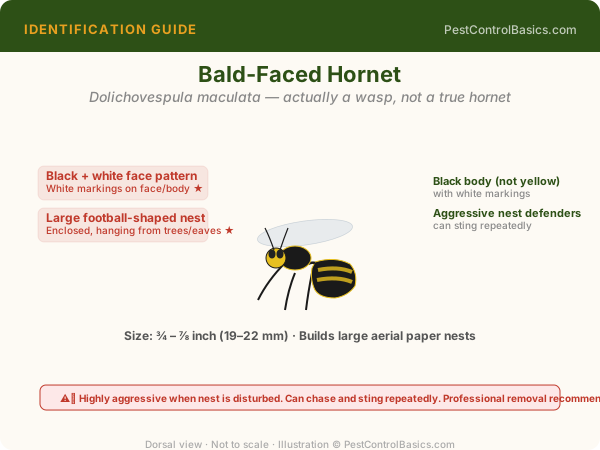
Original illustration by PestControlBasics.com. Use anatomical labels above to confirm your identification.
🔍 Identification
Adults: 15-20mm; black body with distinctive white (not yellow) facial markings and white markings on the thorax and abdomen tip. Colonial — workers, queens, reproductives. Nests: large (up to 24 inches), football to basketball shaped, grey paper, suspended from trees, shrubs, and building overhangs. Entirely enclosed except for a single entrance hole at the bottom.
🧬 Biology & Behavior
Annual colony like all yellow jackets — starts with a single overwintered queen in spring, reaches maximum colony size of 400-700 workers in late summer, collapses at first hard frost. The large enclosed paper nest insulates and protects the colony through temperature extremes.
⚠️ Damage & Health Risk
Extremely aggressive in defense of the nest — will attack in large numbers with minimal provocation within 3-5 feet of the nest. Multiple stings from many workers simultaneously. Both workers and reproductives can sting repeatedly (unlike honey bees). This is the most dangerous stinging insect to encounter in its nesting territory.
🔧 DIY Treatment
Treat at night with a jet wasp spray (long-range aerosol) directed into the entrance hole at the bottom of the nest. Stand back 10+ feet. Wait 5 minutes; retreat if activity continues. This is one situation where professional treatment is strongly recommended due to the colony size and aggression.
👷 When to Call a Pro
Strongly recommended for any nest within 10 feet of a frequently used area. A licensed PCO has access to faster-acting products and appropriate PPE.