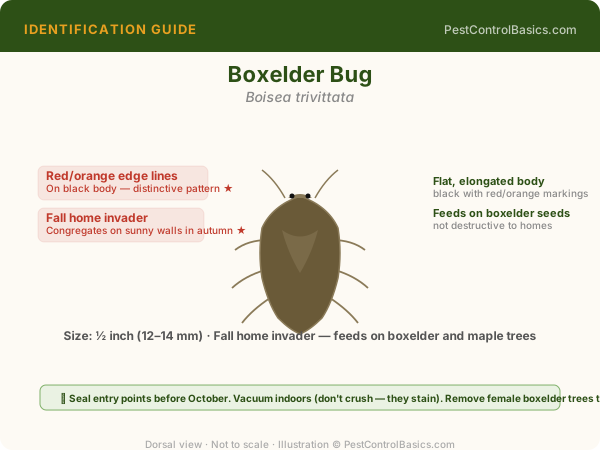
Original illustration by PestControlBasics.com. Use anatomical labels above to confirm your identification.
🔍 Identification
Adults: 11-14mm; black with red veining on wings and red lines on thorax and abdomen — distinctive coloring. Nymphs: bright red with black markings (younger instars); more typical boxelder pattern as they mature. Found aggregating on south-facing walls in September-October, especially near boxelder (Acer negundo), silver maple, and ash trees.
🧬 Biology & Behavior
Boxelder bugs feed primarily on the seed-bearing pods of female boxelder trees (a type of maple) and silver maple seeds. Without these host trees within flying distance, you won't have boxelder bugs. They aggregate using pheromones on warm south-facing surfaces in fall — the same pheromone signal returns them to the same building each year.
⚠️ Damage & Health Risk
No biting, no disease, no structural damage. Minimal plant damage — feeding on seeds isn't economically significant. Aggregation pheromones attract year after year to the same structures. Minor staining from defensive secretions if crushed.
🔧 DIY Treatment
September perimeter spray (bifenthrin or lambda-cyhalothrin) on south and west exterior surfaces before aggregation begins. Seal exterior gaps. Reduce seed-bearing boxelder trees near the home if practical (removing female boxelder trees eliminates their food source). Don't crush — releases odor and staining secretions.
👷 When to Call a Pro
For recurrent severe invasions, a professional September perimeter spray is highly effective.