πŸ¦— Cat Flea Population Biology

Ctenocephalides felis Β· Siphonaptera: Pulicidae

One female cat flea on your pet in March becomes thousands in your home by August. The math of exponential flea population growth explains why early prevention is worth 10x more than summer treatment.

Cat FleaBiologyExponential GrowthPreventionSiphonapteraPopulation
πŸ¦—
Risk Level
Flea Biology
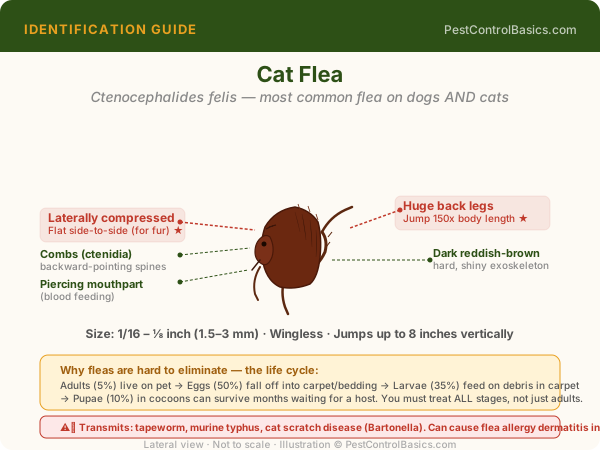
πŸ“ FIELD GUIDE ILLUSTRATION
Cat flea (Ctenocephalides felis) identification illustration with labeled anatomical features β€” PestControlBasics.com

Original illustration by PestControlBasics.com. Use anatomical labels above to confirm your identification.

πŸ”¬
PestControlBasics Editorial Team
Reviewed by Derek Giordano Β· Updated 2026

πŸ” Identification

Female production: 40-50 eggs per day laid on host; eggs fall off host into the environment. Larval development: 5-11 days in 70Β°F conditions. Pupal stage: 5-14 days minimum (can extend months). Adult emergence triggered by: warmth, vibration, CO2. Optimal conditions: 70-85Β°F, 70% humidity. At these conditions, one female's offspring complete the cycle in 18-21 days β€” meaning a population can double in 3 weeks.

🧬 Biology & Behavior

Starting with one mated female on April 1: By May 1 (30 days) β€” potentially 30-50 adult fleas from first generation eggs. By June 1 β€” hundreds. By July 1 β€” thousands. By August 1 β€” tens of thousands. The exponential growth means treatment in April eliminates 1 female. Treatment in August eliminates thousands after they've distributed eggs throughout the house. This is why monthly preventive flea products on pets are dramatically more cost-effective than reactive summer treatment.

⚠️ Damage & Health Risk

Progressive infestation from spring through fall; flea allergy dermatitis in sensitive pets; heavy infestations in fall requiring expensive environmental treatment; potential tapeworm transmission; human bites.

πŸ”§ DIY Treatment

Year-round veterinary flea prevention on all pets β€” the most cost-effective intervention by far. Begins the exponential growth prevention at zero rather than managing established populations.

πŸ‘· When to Call a Pro

For established infestations: complete environmental treatment (adulticide + IGR) plus veterinary pet product on all pets simultaneously.

❓ FAQ

Is year-round flea prevention really necessary in cold climates?
Yes β€” indoor conditions (70-75Β°F) are optimal for flea development regardless of outdoor temperatures. A single flea that hitches a ride indoors in November can establish a winter infestation in a heated home. Year-round prevention on pets prevents this winter introduction that would otherwise go unnoticed until spring when populations explode.
Why does my flea treatment seem to work but then fleas come back?
If you treated once and fleas returned, the pupal bank was not eliminated. Flea cocoons impervious to all insecticides hatched after your treatment. This is the most common cause of 'treatment failure' β€” it's not failure, it's normal pupal emergence. The protocol requires: treat repeatedly at 7-day intervals for 21 days minimum while vacuuming frequently to stimulate pupal emergence.
🧪 Recommended Treatment Products
Flea Treatment Guide Methoprene IGR Beneficial Nematodes Permethrin
Full product guides with mixing rates and safety info. → Browse All 130 Pesticide Guides
πŸ“š Sources: EPA Flea Control Β· CDC Flea-Borne Diseases
Published: Jan 1, 2025 Β· Updated: Apr 7, 2026

πŸ—ΊοΈ US Distribution β€” Cat Flea Biology

image/svg+xml
Common Occasional Not Present
States Present
51
Occasional
0
Primary Region
All 50 states
πŸ“Š Source: University extension services, USDA, CDC vector data, and published entomological surveys.