HomePest LibraryCrickets • Drain Flies • Millipedes
Nuisance Pest Guides

Crickets, Drain Flies & Millipedes

Three of the most common nuisance calls pest pros receive. Moisture, light, and habitat are the common threads — and the solutions are mostly free once you know the root cause.

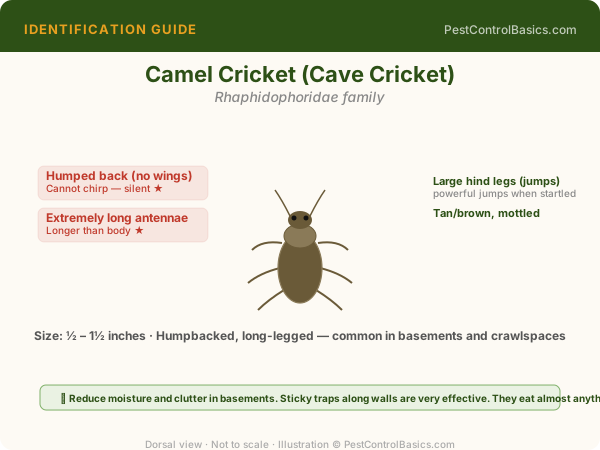
📐 FIELD GUIDE ILLUSTRATION
Camel Cricket (Ceuthophilus spp.) identification illustration with labeled anatomical features — PestControlBasics.com

Original illustration by PestControlBasics.com. Use anatomical labels above to confirm your identification.

🔍 Identification Photo

Use this photo to confirm your identification. Click to enlarge. Correct ID is the essential first step to effective treatment.

House cricket (Acheta domesticus) — yellowish-brown; enlarged hind legs for jumping; males chirp loudly by rubbing wings

House cricket (Acheta domesticus) — yellowish-brown; enlarged hind legs for jumping; males chirp loudly by rubbing wings; common in basements

📷 Wikipedia / Wikimedia Commons / CC BY-SA

⚠️ Photo loaded live from Wikipedia/Wikimedia Commons (CC BY-SA). Appearance varies by region, age, and sex. When uncertain, contact a licensed pest professional.

🦠
Nocturnal ChirperAttracted to White LightEasy DIY
House Cricket
Acheta domesticus & Gryllus species
The chirping at 2am is a male advertising for a mate. Crickets are drawn to exterior lights, enter through ground-level gaps, and establish in moist basements. Switch to yellow LEDs, spray the perimeter, and run a dehumidifier — problem solved.

Why They're In Your Home

House crickets and field crickets are primarily outdoor insects. Indoor infestations are driven by three factors: white exterior lighting that attracts them at night, ground-level entry points, and moist basements that let them survive and breed inside. In late summer populations peak and they start seeking warmth — the same pressure driving stink bugs inside.

💡 The Light Switch Solution

Exterior white lights are the single biggest cricket attractor. Replacing porch lights with yellow LED bulbs (2700K) or motion-activated lights can reduce indoor cricket pressure by 60–80% with no chemical treatment at all. This is step one.

Control Protocol

1
Switch to Yellow LEDs
Replace white porch bulbs with 2700K LEDs. Move lights away from entry points.
2
Perimeter Spray
Bifenthrin along foundation, around doors, over adjacent mulch. Apply early evening.
3
Dehumidify Basement
Below 50% RH. Fix plumbing drips. Dry basements won't sustain cricket populations.
✓ Glue board trapsPlaced along basement walls reveal hotspots and capture large numbers
✓ Seal door gapsGarage door weatherstripping is a primary cricket entry — replace if compressed
✗ Don't ignore humidityCrickets reproduce in moist basements — drying it out is the permanent fix
✓ Boric acid dustAlong basement wall-floor joints kills crickets that groom and ingest it
House Cricket — Quick Ref
Size3/4–1 inch
ActiveNight only
SoundMales chirp — mating call
Attracted ToWhite light, moisture, warmth
Bites?Rarely — minor
Best controlLight + perimeter + low RH
Not sure? AI ID →
🪳
Breed in Drain BiofilmEnzymatic Cleaner — Not Bleach7-Day Fix
Drain Flies
Psychoda species — Moth Flies
Small, fuzzy, slow-moving. They breed exclusively in organic biofilm inside drain pipes — soap scum, hair, and bacteria. Spraying adults kills today's batch while tomorrow's larvae hatch in the drain. You must clean the biofilm with an enzymatic cleaner, not bleach.

The Breeding Site Is Always the Drain

Drain flies lay eggs in gelatinous organic biofilm coating drain pipes. This builds in any infrequently used drain: floor drains in basements, laundry room drains, bathroom drains used rarely, and the overflow hole near the top of bathroom sinks. Spraying them with insecticide leaves the breeding site intact — new adults emerge from larvae within days.

🔍 Tape Test — Find the Source Drain

Place clear tape (sticky side down) over suspect drains before bed. If drain flies are breeding there, you'll find adults stuck to the tape by morning. Test every drain in the home, including floor drains and HVAC condensate lines. Identify all breeding drains before treating.

Treatment — What Works and What Doesn't

What works: Enzymatic drain cleaner (Invade Bio Drain, Green Gobbler). These contain bacteria and enzymes that digest the biofilm drain flies breed in. Pour down each affected drain, let sit overnight, repeat 5–7 nights.

What doesn't work: Bleach. It kills on contact but doesn't dissolve or remove biofilm — it washes past without cleaning. Drain fly breeding resumes within days.

Physical scrubbing first: Use a flexible drain brush to break up the P-trap buildup before applying enzymatic cleaner. Physical disruption plus enzymatic treatment resolves most infestations in 1–2 weeks.

The overflow drain: The small hole near the top of bathroom sink basins connects to the main drain and is rarely cleaned. Treat it specifically — it's one of the most-missed breeding sites.

Floor drains: Pour 1 gallon of water down infrequently used floor drains weekly to maintain the P-trap water seal and block drain fly access from the sewer.

Drain Fly — Quick Ref
Size1/8 inch — tiny
AppearanceFuzzy, moth-like, dark gray
Breeds InDrain pipe organic biofilm
Bleach works?No — use enzymatic cleaner
vs. Fruit FlyFuzzy body; red eyes = fruit fly
Timeline5–14 days to resolve
Dangerous?No — nuisance only
🐛
Mass Rain InvasionHarmless — Dies Indoors in 48hrsRemove Mulch First
Millipedes
Narceus americanus & related species — Order Diplopoda
After heavy rain, millipedes migrate en masse from saturated soil into structures — sometimes by the hundreds. They're harmless, die quickly indoors, and the invasion is temporary. Remove the mulch buffer from the foundation, improve drainage, and perimeter treat before rain.

Why They Invade — The Rain Trigger

Millipedes eat decaying organic matter in moist soil and mulch. When soil becomes waterlogged after heavy rain, they migrate upward and outward seeking drier ground — toward your foundation. They die within 24–48 hours indoors because low humidity kills them. The invasion is self-limiting, but the outdoor population remains and will repeat with each heavy rain until habitat is reduced.

💡 Millipede vs. Centipede

Both have many legs. Key differences: millipedes have 2 pairs of legs per body segment and move slowly — they curl into a ball when threatened. Centipedes have 1 pair per segment, move very fast, and can bite. The fast one darting across your bathroom floor is a centipede (beneficial predator). The slow curling one is a millipede (harmless detritivore).

Control Strategy

1
Remove Mulch Buffer
Pull mulch 6–12 inches from foundation. Replace that zone with gravel. Eliminates primary harborage adjacent to entry points.
2
Improve Drainage
Grade soil away from foundation. Extend downspouts. Reduce soil saturation that triggers migration.
3
Perimeter Treatment
Bifenthrin granules or spray along foundation band. Apply before predicted heavy rain for best timing.

Indoor millipedes: Sweep or vacuum — they die quickly anyway. No indoor chemical treatment needed. Some large species secrete a mild defensive chemical when threatened (hydrogen cyanide compounds) — wash hands after handling, keep away from eyes.

✓ Long-Term Fix

The 18-inch foundation clearance zone — either bare soil or gravel instead of mulch — is the single most effective long-term millipede (and earwig) prevention measure. It also helps with carpenter ants, boxelder bugs, and stink bugs. One change reduces pressure from multiple pest species simultaneously.

Millipedes — Quick Ref
Legs2 pairs per body segment
MovementSlow — curls when threatened
Bites?No — completely harmless
TriggerSaturated soil after heavy rain
Lives indoors?No — dies within 48 hours
Primary driverMoist mulch at foundation
SolutionMulch removal + drainage fix
📚 Sources: EPA Termite Guide · NPMA Termite Info
Published: Jan 1, 2025 · Updated: Apr 7, 2026
Crickets, Drain Flies & Millipedes

Frequently Asked Questions

How do I know if I have Crickets, Drain Flies & Millipedes?

Signs of Crickets, Drain Flies & Millipedes include physical sightings, droppings or frass, damage to food or materials, and unusual odors. Inspect hidden areas like wall voids, behind appliances, and in storage spaces. A flashlight inspection after dark is often most revealing.

Are Crickets, Drain Flies & Millipedes dangerous to humans or pets?

Crickets, Drain Flies & Millipedes can pose health risks including bites, allergic reactions, food contamination, and disease transmission. Children, elderly, and pets are especially vulnerable. Consult a pest management professional when an infestation is confirmed.

Can I eliminate Crickets, Drain Flies & Millipedes myself?

Light infestations may be manageable with DIY baits, traps, and targeted treatments. Established infestations typically require professional intervention. Misapplied products often scatter pests and worsen the problem long-term.

How long does Crickets, Drain Flies & Millipedes treatment take?

Timelines vary by infestation size and method. Baits may take 1–4 weeks to work through a colony. Chemical treatments often require 2–3 applications spaced 2–4 weeks apart. Monitor for 30–60 days after treatment to confirm elimination.

What attracts Crickets, Drain Flies & Millipedes to my home?

Crickets, Drain Flies & Millipedes are typically drawn by food sources, standing moisture, warmth, and shelter. Sealing entry points, reducing clutter, fixing leaks, and storing food in airtight containers are the most effective long-term prevention measures.

Related Resources

📚 Full Pest Library🧪 DIY vs. Pro Quiz💰 Cost Guide🌿 IPM Guide🔍 Find a Pro
🧪 Recommended Treatment Products
Bifenthrin Diatomaceous Earth IPM Guide
Full product guides with mixing rates and safety info. → Browse All 130 Pesticide Guides
🔮
Reviewed by Derek GiordanoContent on PestControlBasics.com is developed with input from certified pest management professionals and cross-referenced against EPA, CDC, and university extension guidance. Last reviewed: April 2026.

🗺️ US Distribution — Crickets, Drain Flies & Millipedes

image/svg+xml
Common Occasional Not Present
States Present
49
Occasional
2
Primary Region
Continental US
📊 Source: University extension services, USDA, CDC vector data, and published entomological surveys.