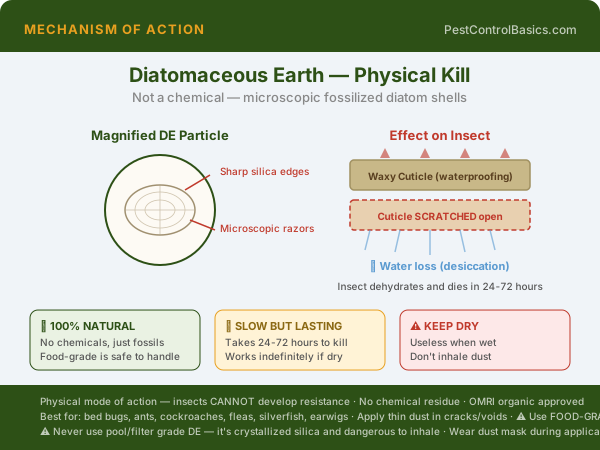
Diatomaceous Earth mechanism of action diagram

How diatomaceous earth works — illustrated mechanism of action · PestControlBasics.com

🧪 Active Ingredient Profile

Diatomaceous Earth — Food Grade, Pool Grade & Pest Control Guide

Desiccant (Physical Mode of Action) · CAS 61790-53-2

Diatomaceous earth (DE) is fossilized diatom shells — and one of the few truly physical pest control agents. No chemical toxicity, no resistance possible. The critical distinction: food-grade DE is safe; pool-grade DE (crystalline silica) is a respiratory carcinogen.

Mode of Action Mechanical — microscopic silica particles abrade and absorb the waxy epicuticular layer of insect exoskeletons, causing lethal dehydration; no chemical toxicity

📋 Key Facts

Type
Amorphous silica (food-grade) or crystalline silica (pool-grade)
Signal Word
None (food-grade) / Danger (pool-grade)
Mode of Action
Physical dehydration — no chemical resistance possible
OMRI Listed
Yes (food-grade)
Effectiveness
Kills in hours to days depending on contact
Key Products
Harris DE, Safer Brand DE, CimeXa (silica gel — more effective)
Critical Distinction
NEVER use pool-grade DE around people or pets

🎯 Primary Uses

Food-grade diatomaceous earth is used for: cockroach control in harborage areas, bed bug treatment (less effective than CimeXa), stored product pest prevention, ant control in wall voids, and garden pest management. Apply as a thin, barely-visible layer — thick application repels insects.

🛡️ Safety Summary

Food-grade amorphous DE is considered non-toxic to mammals when used correctly. The primary safety concern is respiratory — inhaling any fine dust repeatedly can cause irritation. Wear an N95 mask during application. Pool-grade DE contains crystalline silica — a known human carcinogen — and should NEVER be used for pest control.

🔬 Resistance Status

No chemical resistance possible — DE works by physical abrasion, not chemistry. Insects cannot develop resistance to physical dehydration. This makes it permanently effective for cockroaches and bed bugs that have developed resistance to all chemical insecticides.

🏷️ Common Products

Harris DESafer Brand Crawling Insect KillerHARRIS Bed Bug KillerCimeXa (silica gel — superior to DE for bed bugs)Perma-Guard Food Grade DE

❓ FAQ

What's the difference between food-grade and pool-grade diatomaceous earth?
Food-grade DE is amorphous silica — safe for pest control and even livestock feed. Pool-grade DE is processed at high heat, converting it to crystalline silica, which is a respiratory carcinogen. Never use pool-grade DE for pest control — always verify 'food-grade' and 'OMRI Listed' on the label.
Is diatomaceous earth better than CimeXa for bed bugs?
No — CimeXa (amorphous silica gel) is significantly more effective than diatomaceous earth for bed bugs. CimeXa particles are smaller and adhere better to insect cuticles. Studies show CimeXa kills bed bugs 3-4x faster than DE. Both work by dehydration with no resistance risk.

📋 Safety Data Sheet (SDS)

📄

Diatomaceous Earth — Safety Data Sheet

The SDS document preview will appear here once the first-page image is uploaded to your server.

📎 To display the SDS preview:
1. Open the SDS PDF for this product
2. Screenshot or export page 1 as a JPG image
3. Upload to /sds/diatomaceous-earth-sds-page1.jpg
4. The image will display automatically here
📄 Search for this SDS on CDMS →
📄 Diatomaceous Earth — Safety Data Sheet · View the complete SDS document above or download below
⚖️ Educational use only. PestControlBasics.com is not a licensed pest control operator. The label is the law under FIFRA — always read and follow your product label. Full disclaimer →
⚗️
Interactive Mixing Calculator
Get exact amounts for any sprayer size — backpack, hand sprayer, or skid unit.
Open Calculator →
📚 Sources: EPA Pesticide Labels · NPIC Pesticide Info
Published: Jan 1, 2025 · Updated: Apr 7, 2026