🪲 Cucumber Beetles — Comparison Guide

Diabrotica undecimpunctata / Acalymma vittatum · Coleoptera: Chrysomelidae

Spotted and striped cucumber beetles are the #1 cucumber and squash pest in American gardens. They vector bacterial wilt — a disease that kills plants within weeks and has no cure.

Cucumber BeetleDiabroticaBacterial WiltVegetableRow CoverDisease Vector
🪲
Risk Level
Vegetable Garden Pest
📐 FIELD GUIDE ILLUSTRATION
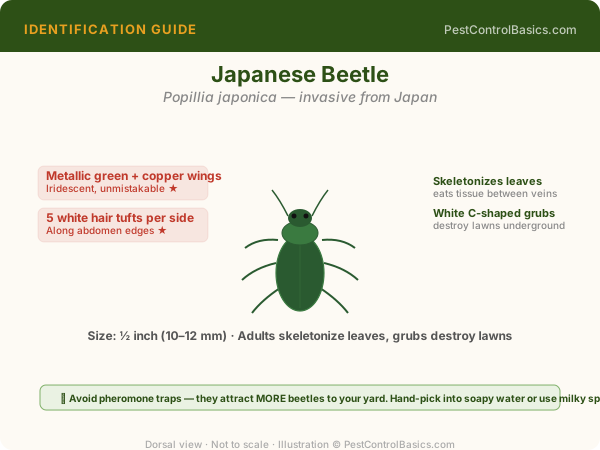
Japanese Beetle (Popillia japonica) identification illustration with labeled anatomical features — PestControlBasics.com

Original illustration by PestControlBasics.com. Use anatomical labels above to confirm your identification.

🔬
PestControlBasics Editorial Team
Reviewed by Derek Giordano · Updated 2026

🔍 Identification

Striped cucumber beetle (Acalymma vittatum): 6mm; yellow with 3 black stripes on wing covers; found east of Rockies primarily. Western spotted cucumber beetle (Diabrotica undecimpunctata): 8mm; yellow-green with 12 black spots; found throughout US (also called corn rootworm beetle in larvae stage). Both feed on: cucumber, squash, melon, beans, corn. Both vector Erwinia tracheiphila (bacterial wilt in cucumbers and melons) — transmitted through feces.

🧬 Biology & Behavior

Bacterial wilt transmission is the primary concern. Once transmitted, bacterial wilt causes rapid wilting and plant death within 2-4 weeks — no treatment cures it. Only preventive control of beetles prevents bacterial wilt. Row cover is the only fully reliable prevention for bacterial wilt — it physically excludes beetles. Chemical control reduces beetle populations but doesn't eliminate transmission risk.

⚠️ Damage & Health Risk

Adult feeding damage on flowers, pollen, and leaves; larval damage to roots (corn rootworm larvae are the same species); bacterial wilt transmission killing cucumber and melon plants; economic losses in commercial production.

🔧 DIY Treatment

Row cover until flowering (remove during bloom to allow pollination); kaolin clay applied to plants deters feeding; trap crops (Blue Hubbard squash draws beetles away from main crop); pyrethrin or spinosad spray on beetles present in the garden. Sticky yellow traps for monitoring.

👷 When to Call a Pro

Commercial cucurbit production: spray programs timed to adult emergence at vine emergence; threshold monitoring with sticky traps guides application timing.

❓ FAQ

How do I prevent bacterial wilt from cucumber beetles?
Row cover installed at planting is the only reliable prevention — it physically keeps beetles out during the most vulnerable period. Remove during flowering to allow bee pollination, then you must accept some beetle exposure. Choose wilt-resistant cucumber varieties (listed as 'wilt-resistant' on seed packets) — some modern varieties show moderate resistance. Once your plant wilts rapidly in summer with beetles present, bacterial wilt is likely and the plant should be removed.
What is the stab test for bacterial wilt?
Cut a wilting stem near the base and touch the two cut ends together briefly, then slowly pull apart. If thin silvery threads form between the two ends as you separate them, this confirms bacterial wilt (Erwinia tracheiphila). Healthy vascular tissue and other wilt causes don't produce these threads. This simple test provides immediate field diagnosis.
📚 Sources: EPA Safe Pest Control · NPMA Pest Guide
Published: Jan 1, 2025 · Updated: Apr 7, 2026

🗺️ US Distribution — Western Spotted Cucumber Beetle vs Striped

image/svg+xml
Common Occasional Not Present
States Present
49
Occasional
2
Primary Region
All agricultural regions
📊 Source: University extension services, USDA, CDC vector data, and published entomological surveys.