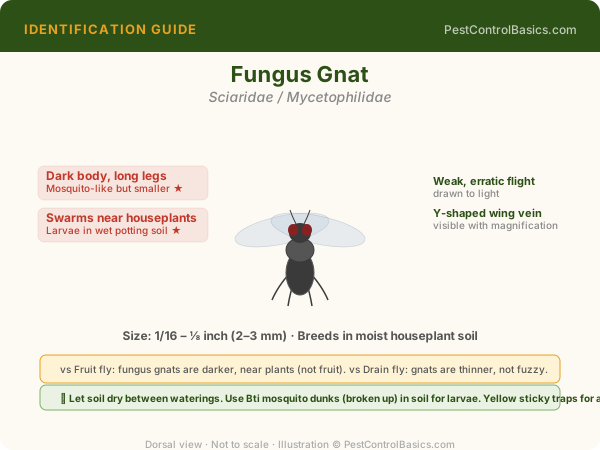
Original illustration by PestControlBasics.com. Use anatomical labels above to confirm your identification.
🔍 Identification
Adults: 2mm; dark grey-black; long thin legs; long antennae; poor flier (erratic); found walking on soil or flying weakly around plants. Larvae: 4-5mm; white/clear body; black head capsule; in moist soil. Eggs: laid in moist soil surface. The adult's Y-shaped wing vein is the microscopic ID feature.
🧬 Biology & Behavior
Eggs hatch in 4-6 days. Larvae feed on organic matter and fungal hyphae in moist soil for 2 weeks — and on plant roots in heavy infestations. Pupate in soil for 5-6 days. Adults live 7-10 days. Total generation: approximately 17-28 days at room temperature. This means new adults emerge continuously from eggs laid before treatment began — why single treatments fail.
⚠️ Damage & Health Risk
Root damage in seedlings and young plants (stunted growth, wilting); adult nuisance; contamination of food preparation areas.
🔧 DIY Treatment
Bti israelensis (Mosquito Bits steeped in water, or Gnatrol) soil drench every 5-7 days for minimum 4 weeks. Let soil dry between waterings — larvae require moist soil. Yellow sticky traps for adult monitoring. No pyrethroid spray needed — focus on the larval soil stage.
👷 When to Call a Pro
Commercial greenhouse programs use Bti + predatory mites (Stratiolaelaps scimitus) for sustained biological control.