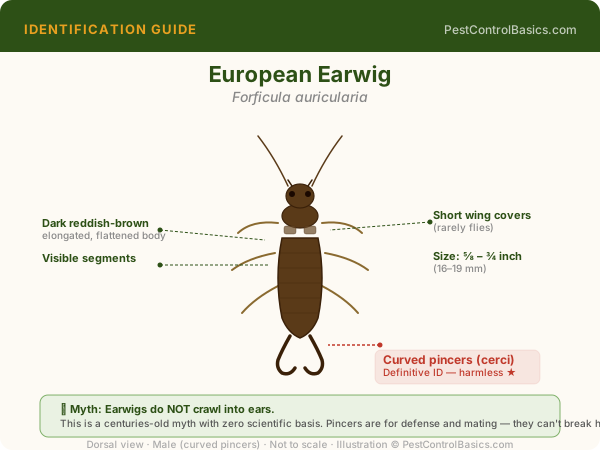
Original illustration by PestControlBasics.com. Use anatomical labels above to confirm your identification.
🔍 Identification Photo
Use this photo to confirm your identification. Click to enlarge.
Common earwig (Forficula auricularia) — reddish-brown, 12–15mm; curved pincers at tail are for defense and prey, not humans
📷 Wikipedia / Wikimedia Commons / CC BY-SA⚠️ Photo loaded live from Wikipedia/Wikimedia Commons (CC BY-SA).
⚠️ Photos loaded from Wikipedia/Wikimedia Commons. Appearance varies by region, age, and sex.
Everything you think you know about earwigs is probably wrong
"Earwigs crawl into ears at night" — This ancient folk belief is completely false. There is no scientific evidence that earwigs seek out human ears. The name comes from an Old English word "earwicga" — which likely referred to a wing shape resembling an ear, not any behavior.
"Their pincers cause dangerous wounds" — Earwig pincers (cerci) can produce a very mild pinch if handled roughly — comparable to a paperclip. They cause no injury to humans and cannot break skin in any meaningful way.
"They spread disease or are venomous" — Earwigs are not disease vectors, are not venomous, and pose zero medical risk to humans, pets, or children.
They are moisture-seeking nuisance insects. Earwigs need damp, dark environments to survive. Finding them in your home is a moisture signal — check for plumbing leaks, drainage issues, and over-irrigated garden beds against the foundation.
They can damage garden plants. While harmless to humans, earwigs do feed on soft plant tissue, seedlings, and flower petals at night. They're a legitimate garden pest — just not a human health concern.
They're easy to control. Remove moist harborage (mulch, debris, leaf piles) near the foundation, fix drainage, and apply a perimeter spray. Problem solved in most cases within 1–2 weeks.
Why they show up — and where to look
Earwigs are nocturnal and thiphilic (moisture-loving). During the day they hide in tight, dark, moist spaces — under mulch, boards, leaf litter, rocks, and debris. At night they emerge to feed on decaying organic matter, algae, and plant material.
They enter homes seeking moisture during hot, dry weather — following the same cool, moist conditions they find in mulch beds. Common indoor locations: bathrooms, basements, laundry rooms, and any area near a moisture source. Finding them consistently indoors signals that entry points near moisture are unsealed.
Dense mulch layered against the foundation is the primary earwig harborage site for most home infestations. Mulch holds moisture, provides darkness, and sits directly against the structure's entry points. Pulling mulch 6–12 inches away from the foundation eliminates the primary harborage and dramatically reduces earwig pressure — often more effectively than any chemical treatment.
Why They Mass-Invade Some Years
Earwig populations vary dramatically year to year based on winter moisture. Wet winters followed by warm springs cause population explosions. A single female lays 30–50 eggs and guards them until hatching — unusual maternal behavior for an insect. Mass invasions typically follow abnormally wet late-winter and spring weather.
Three steps — in this order
Fill a shallow tuna can halfway with vegetable oil and a few drops of soy sauce. Place at ground level near earwig activity areas. Earwigs are attracted to the oil and drown. Empty and refill every few days. Effective for monitoring and population reduction in garden beds — free, chemical-free, and surprisingly efficient during peak earwig season.
Keep them from coming back
Exterior Lighting
Earwigs are strongly attracted to white light — they aggregate under porch lights and near illuminated windows at night. Replacing white exterior bulbs with yellow LED or sodium vapor bulbs dramatically reduces earwig attraction to the structure. Motion-activated lights over always-on lights for the same reason.
Mulch Alternatives
For foundation beds chronically afflicted with earwig pressure, switch from bark mulch to inorganic mulch alternatives: river gravel, crushed granite, or rubber mulch. These don't hold moisture the same way and provide far less earwig harborage. The 18-inch foundation clearance of bare soil or gravel is the professional standard.
Seal Entry Points
Caulk all gaps around windows, doors, utility penetrations, and weatherstripping at the foundation level. Earwigs enter through the same gaps as other moisture-seeking insects. Annual perimeter caulking in late summer prevents fall and winter indoor incursions.