✗ The Ear Myth Is False Moisture Attracted Easy DIY Control

Earwigs

Forficula auricularia — European Earwig

The most misunderstood insect in North America. They do not crawl into ears. They do not pinch painfully. They are not dangerous. They are a moisture-attracted nuisance that's easy to control once you understand what draws them to your home.

Danger LevelNone — completely harmless
Attracted ToMoisture, mulch, debris, lights
Active WhenNight — hide by day
Control EaseHigh — habitat reduction works
🫣
Quick Reference Card
European Earwig
Size5/8 inch — reddish-brown
PincersCerci — curved in males, straight in females
WingsYes — rarely fly despite having wings
Where FoundMulch, leaf litter, under boards, debris
InsideBathrooms, basements — moisture areas
Do They Bite?Rarely — harmless pinch at most
Dangerous?No — completely harmless to humans
Best ControlRemove mulch + dry out + perimeter spray
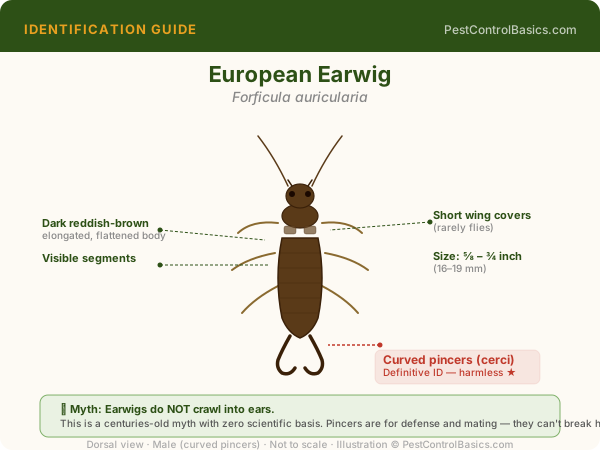
📐 FIELD GUIDE ILLUSTRATION
European earwig (Forficula auricularia) identification illustration with labeled anatomical features — PestControlBasics.com

Original illustration by PestControlBasics.com. Use anatomical labels above to confirm your identification.

🔍 Identification Photo

Use this photo to confirm your identification. Click to enlarge.

Common earwig (Forficula auricularia) — reddish-brown, 12–15mm; curved pincers at tail are for defense and prey, not hum

Common earwig (Forficula auricularia) — reddish-brown, 12–15mm; curved pincers at tail are for defense and prey, not humans

📷 Wikipedia / Wikimedia Commons / CC BY-SA

⚠️ Photo loaded live from Wikipedia/Wikimedia Commons (CC BY-SA).

⚠️ Photos loaded from Wikipedia/Wikimedia Commons. Appearance varies by region, age, and sex.

Myth vs. Fact

Everything you think you know about earwigs is probably wrong

✗ The Myths

"Earwigs crawl into ears at night" — This ancient folk belief is completely false. There is no scientific evidence that earwigs seek out human ears. The name comes from an Old English word "earwicga" — which likely referred to a wing shape resembling an ear, not any behavior.

"Their pincers cause dangerous wounds" — Earwig pincers (cerci) can produce a very mild pinch if handled roughly — comparable to a paperclip. They cause no injury to humans and cannot break skin in any meaningful way.

"They spread disease or are venomous" — Earwigs are not disease vectors, are not venomous, and pose zero medical risk to humans, pets, or children.

✓ The Facts

They are moisture-seeking nuisance insects. Earwigs need damp, dark environments to survive. Finding them in your home is a moisture signal — check for plumbing leaks, drainage issues, and over-irrigated garden beds against the foundation.

They can damage garden plants. While harmless to humans, earwigs do feed on soft plant tissue, seedlings, and flower petals at night. They're a legitimate garden pest — just not a human health concern.

They're easy to control. Remove moist harborage (mulch, debris, leaf piles) near the foundation, fix drainage, and apply a perimeter spray. Problem solved in most cases within 1–2 weeks.

Biology & Behavior

Why they show up — and where to look

Earwigs are nocturnal and thiphilic (moisture-loving). During the day they hide in tight, dark, moist spaces — under mulch, boards, leaf litter, rocks, and debris. At night they emerge to feed on decaying organic matter, algae, and plant material.

They enter homes seeking moisture during hot, dry weather — following the same cool, moist conditions they find in mulch beds. Common indoor locations: bathrooms, basements, laundry rooms, and any area near a moisture source. Finding them consistently indoors signals that entry points near moisture are unsealed.

💡 The Mulch Connection

Dense mulch layered against the foundation is the primary earwig harborage site for most home infestations. Mulch holds moisture, provides darkness, and sits directly against the structure's entry points. Pulling mulch 6–12 inches away from the foundation eliminates the primary harborage and dramatically reduces earwig pressure — often more effectively than any chemical treatment.

Why They Mass-Invade Some Years

Earwig populations vary dramatically year to year based on winter moisture. Wet winters followed by warm springs cause population explosions. A single female lays 30–50 eggs and guards them until hatching — unusual maternal behavior for an insect. Mass invasions typically follow abnormally wet late-winter and spring weather.

Control Protocol

Three steps — in this order

1
Remove Harborage
Pull mulch 6–12 inches from foundation. Remove leaf piles, debris, boards, and stones near the structure. Earwigs cannot maintain populations without cool, moist hiding spots directly against the building.
2
Reduce Moisture
Fix any drainage that pools near the foundation. Ensure gutters discharge away from the building. Reduce irrigation frequency near foundation plantings — let soil dry between waterings. Repair any plumbing drips under sinks.
3
Perimeter Spray
Apply bifenthrin or permethrin along the foundation band (3 feet up, 3 feet out) and around all entry points. Treat in early evening when earwigs are becoming active. Reapply after rain. This kills stragglers after habitat modification.
🌿
Perimeter Spray — Primary Treatment
Bifenthrin Perimeter Spray (Talstar, Bifen IT)
How to apply: Mix per label directions and apply with a pump sprayer along the foundation — 3 feet up the wall and 3 feet out from the structure. Also treat under decks, around utility penetrations, and where mulch meets the house. Apply in early evening when earwigs are beginning to move. Residual lasts 4–8 weeks. Most effective when combined with mulch removal — spray alone provides limited control if harborage remains.
★★★★Ⓒ
Effective
🪟
Granule Bait — Garden & Perimeter
Monterey Sluggo Plus (Spinosad + Iron Phosphate)
How it works: Granule bait containing spinosad (earwig stomach poison) and iron phosphate (harmless to most wildlife). Sprinkle around garden beds, along the foundation, and in areas where earwigs are foraging. Earwigs eat the granules and die within 24–48 hours. OMRI-listed for organic use — safe around pets, birds, and beneficial insects when dry. Particularly effective for garden plant protection where spray use is less practical.
★★★★Ⓒ
Organic Option
🌿 The Oil Trap — Free DIY Method

Fill a shallow tuna can halfway with vegetable oil and a few drops of soy sauce. Place at ground level near earwig activity areas. Earwigs are attracted to the oil and drown. Empty and refill every few days. Effective for monitoring and population reduction in garden beds — free, chemical-free, and surprisingly efficient during peak earwig season.

Prevention

Keep them from coming back

Exterior Lighting

Earwigs are strongly attracted to white light — they aggregate under porch lights and near illuminated windows at night. Replacing white exterior bulbs with yellow LED or sodium vapor bulbs dramatically reduces earwig attraction to the structure. Motion-activated lights over always-on lights for the same reason.

Mulch Alternatives

For foundation beds chronically afflicted with earwig pressure, switch from bark mulch to inorganic mulch alternatives: river gravel, crushed granite, or rubber mulch. These don't hold moisture the same way and provide far less earwig harborage. The 18-inch foundation clearance of bare soil or gravel is the professional standard.

Seal Entry Points

Caulk all gaps around windows, doors, utility penetrations, and weatherstripping at the foundation level. Earwigs enter through the same gaps as other moisture-seeking insects. Annual perimeter caulking in late summer prevents fall and winter indoor incursions.

Earwigs
Earwigs

Frequently Asked Questions

How do I know if I have Earwigs?

Signs of Earwigs include physical sightings, droppings or frass, damage to food or materials, and unusual odors. Inspect hidden areas like wall voids, behind appliances, and in storage spaces. A flashlight inspection after dark is often most revealing.

Are Earwigs dangerous to humans or pets?

Earwigs can pose health risks including bites, allergic reactions, food contamination, and disease transmission. Children, elderly, and pets are especially vulnerable. Consult a pest management professional when an infestation is confirmed.

Can I eliminate Earwigs myself?

Light infestations may be manageable with DIY baits, traps, and targeted treatments. Established infestations typically require professional intervention. Misapplied products often scatter pests and worsen the problem long-term.

How long does Earwigs treatment take?

Timelines vary by infestation size and method. Baits may take 1–4 weeks to work through a colony. Chemical treatments often require 2–3 applications spaced 2–4 weeks apart. Monitor for 30–60 days after treatment to confirm elimination.

What attracts Earwigs to my home?

Earwigs are typically drawn by food sources, standing moisture, warmth, and shelter. Sealing entry points, reducing clutter, fixing leaks, and storing food in airtight containers are the most effective long-term prevention measures.

🧪 Recommended Treatment Products
Bifenthrin Diatomaceous Earth IPM Guide
Full product guides with mixing rates and safety info. → Browse All 130 Pesticide Guides

Related Resources

📚 Full Pest Library🧪 DIY vs. Pro Quiz💰 Cost Guide🌿 IPM Guide🔍 Find a Pro
🔮
Reviewed by Derek GiordanoContent on PestControlBasics.com is developed with input from certified pest management professionals and cross-referenced against EPA, CDC, and university extension guidance. Last reviewed: April 2026.
📚 Sources: EPA Termite Guide · NPMA Termite Info
Published: Jan 1, 2025 · Updated: Apr 7, 2026

🗺️ US Distribution — Earwigs

image/svg+xml
Common Occasional Not Present
States Present
49
Occasional
2
Primary Region
Continental US
📊 Source: University extension services, USDA, CDC vector data, and published entomological surveys.