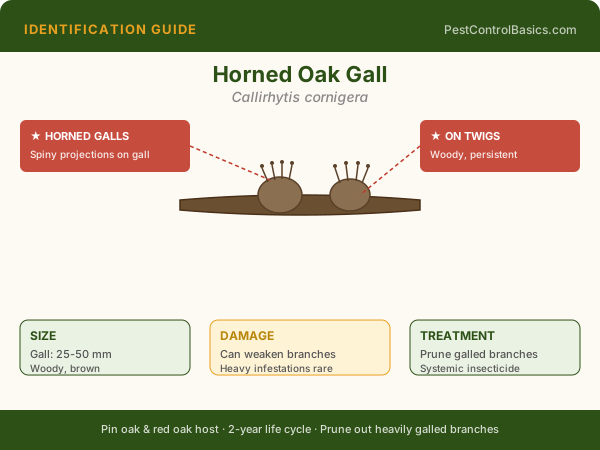
Illustrated identification guide — PestControlBasics.com
🔍 Identification
Galls: 2-4cm diameter; woody, hard; brown; covered with horn-like projections (0.5-1.5cm horns) in a distinctive pattern. Found attached to stems and branches of pin oak, scarlet oak, and black oak. The wasp that creates them is 2mm and essentially invisible — only the galls are diagnostic. Heavy infestations can completely cover secondary branches with galls.
🧬 Biology & Behavior
The horned oak gall wasp has a complex alternating generation life cycle involving two hosts — pin oak (asexual generation) and water oak (sexual generation). The horned galls on stems are the asexual generation's creation. Each gall contains multiple wasp larvae. Galls enlarge annually and girdle branches, cutting off vascular flow — this is what kills branches, not the feeding of the larvae directly.
⚠️ Damage & Health Risk
Branch girdling and dieback; loss of significant branches in heavy infestations; weakening of valuable pin oak specimens over years; eventually significant canopy loss.
🔧 DIY Treatment
Prune and destroy gall-bearing branches in winter before adults emerge (January-February). Avoid pruning pin oaks during susceptible periods (May-June). Professional systemic injection with emamectin benzoate (TREE-äge) protects high-value trees. No highly effective chemical spray exists for adults — the brief flight period and small size make spray timing difficult.
👷 When to Call a Pro
Certified arborist trunk injection with emamectin benzoate is the most effective professional management for established high-value pin oaks with chronic gall problems.