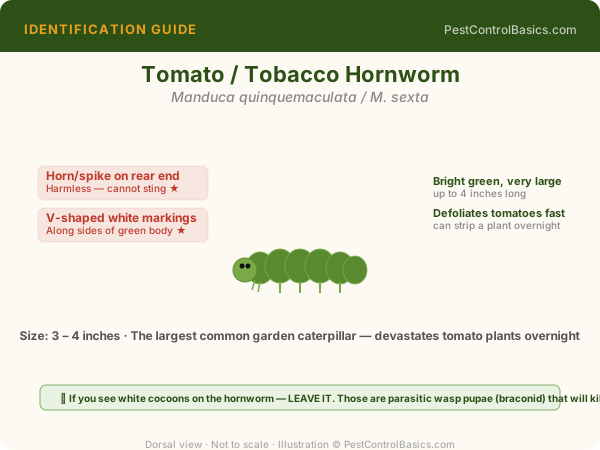
Original illustration by PestControlBasics.com. Use the labeled features above to confirm your identification.
🔍 Identification
Adults: 2-5mm; small, dark, wasp-like; rarely noticed. Larvae: develop inside hornworm body, consuming non-vital tissues. Cocoons: white, oval, rice-grain-sized; emerge through hornworm skin and pupate externally. Parasitized hornworms: alive but sluggish; don't feed; will die. Found on tomato hornworm and tobacco hornworm specifically.
🧬 Biology & Behavior
Female Cotesia wasps detect hornworm feeding by plant volatile compounds and lay eggs in the hornworm's hemolymph. Larvae develop inside the living hornworm, avoiding vital organs to keep the host alive. When larvae are ready to pupate, they chew through the hornworm skin and spin cocoons on the outside. The hornworm is still alive and may twitch but cannot feed or reproduce. Adults emerge from cocoons and seek new hornworms to parasitize.
⚠️ Damage & Health Risk
Zero negative impact — entirely beneficial. Cotesia congregata reduces hornworm populations throughout the growing season without any spray application.
🔧 DIY Treatment
Leave parasitized hornworms in place — they are the next generation of parasitoid wasps. Remove unparasitized hornworms. Never spray Bt or spinosad near parasitized hornworms — the spray will kill the wasp pupae inside and on the caterpillar.
👷 When to Call a Pro
Never warranted for braconid wasps — protect them.