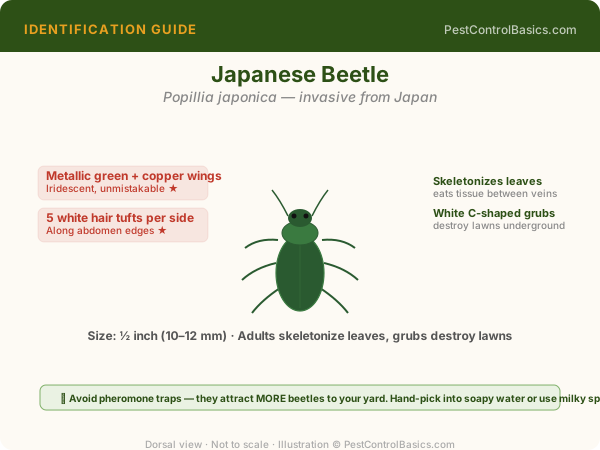
Original illustration by PestControlBasics.com. Use anatomical labels above to confirm your identification.
🔍 Identification
Larvae (grubs): C-shaped; cream-white; 25mm at maturity; identifiable by raster pattern (V-shaped row of spines on underside of last segment — requires magnification). Found 2-6 inches deep in soil from June through May (overwintering below frost line in winter). Adults emerge July. Egg-laying in July-August. New grubs hatch August and feed on roots through fall. Peak lawn damage: August-October.
🧬 Biology & Behavior
Japanese beetle grubs complete a one-year life cycle. The preventive treatment window (June-July) targets newly hatched young grubs near the soil surface when insecticides are most effective and need to travel a shorter distance to reach them. Curative treatments applied in August to mature grubs require much higher product concentrations to achieve the same kill percentage. Chlorantraniliprole (Acelepryn) has the longest residual (applied in May-June, protects through fall) and represents the most cost-effective preventive approach.
⚠️ Damage & Health Risk
Turf root destruction causing brown patches; spongy lawn that rolls back like carpet; secondary damage from skunks, moles, and crows digging for grubs; significant economic losses in commercial turf management.
🔧 DIY Treatment
Preventive June application: chlorantraniliprole (Acelepryn) or imidacloprid — water in within 24 hours. Milky spore (Paenibacillus popilliae) for long-term organic suppression over 3-5 years. Beneficial nematodes (Heterorhabditis bacteriophora) applied in August-September when grubs are present.
👷 When to Call a Pro
Commercial turf: chlorantraniliprole at 0.2 lb AI/acre in June provides season-long protection at the lowest environmental impact per unit of control.