πŸͺ² June Bug (May Beetle)

Phyllophaga spp. Β· Coleoptera: Scarabaeidae

June bugs are the clumsy, fat beetles crashing into your porch lights in May and June β€” and their larvae are a primary white grub species in lawns.

BeetleScarabaeidaeWhite GrubLawn PestLight AttractorJune Bug
πŸͺ²
Risk Level
Lawn Pest / Light Attractor
πŸ“ FIELD GUIDE ILLUSTRATION
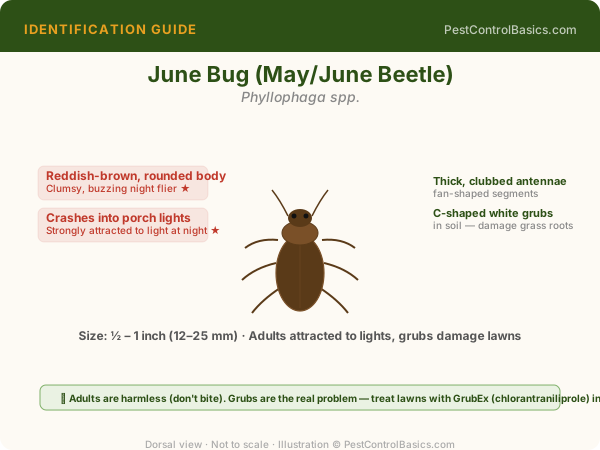
June bug (Phyllophaga) identification illustration with labeled anatomical features β€” PestControlBasics.com

Original illustration by PestControlBasics.com. Use the labeled features above to confirm your identification.

πŸ”¬
PestControlBasics Editorial Team
Reviewed by Derek Giordano Β· Updated 2026

πŸ” Identification

Adults: 15-25mm; oval; uniformly chestnut brown to reddish-brown; no metallic sheen; clumsily fly into lights at night. Very common at porch and street lights late May through July. Larvae (grubs): C-shaped white grubs, 25-35mm; found 2-4 inches deep in soil; identical to other white grubs requiring microscopic examination to distinguish by species.

🧬 Biology & Behavior

Adults are attracted to lights at night and feed minimally on tree foliage. Females lay eggs in turf; larvae feed on grass roots for 2-3 years before pupating. June bug grubs are one of the most common white grub species in the northern US and Canada, overlapping with Japanese beetle grub pressure.

⚠️ Damage & Health Risk

Adult: cosmetic leaf feeding on oak, elm, and other trees; nuisance light attraction at buildings. Larvae: root feeding causing lawn damage patches that peel from soil; bird digging in lawn seeking grubs.

πŸ”§ DIY Treatment

Adults: reduce exterior lighting intensity or switch to yellow bulbs. Larvae: apply chlorantraniliprole (Acelepryn) preventively in June-July; imidacloprid in May. Milky spore disease for long-term biological control. May require 2-3 year cycle treatment due to multi-year larval development.

πŸ‘· When to Call a Pro

For large lawn areas with severe annual grub damage, professional soil treatment provides better coverage.

❓ FAQ

How do I tell June bug grubs from Japanese beetle grubs?
The adult is the most reliable ID: June bugs are uniformly brown with no metallic coloring; Japanese beetles have metallic green thorax and copper wings. Grub ID requires examining the raster pattern (hair rows) under a magnifying glass β€” extension entomologists can identify species from grub samples.
Why do June bugs crash into lights?
June bugs (and most flying beetles) navigate at night using the moon for orientation. Artificial lights are brighter than the moon and confuse their navigation system, causing them to spiral toward the light source. This is phototaxis β€” attraction to light β€” and is why reducing outdoor lighting reduces beetle impacts.
πŸ“š Sources: EPA Safe Pest Control Β· NPMA Pest Guide
Published: Jan 1, 2025 Β· Updated: Apr 7, 2026

πŸ—ΊοΈ US Distribution β€” June Bug (May Beetle)

image/svg+xml
Common Occasional Not Present
States Present
49
Occasional
2
Primary Region
All agricultural regions
πŸ“Š Source: University extension services, USDA, CDC vector data, and published entomological surveys.