HomePest LibraryMole
Lawn Pest — Insectivore, Not a Rodent
🐰

Mole

Scalopus aquaticus & Parascalops breweri

Enormous paddle-shaped front claws, tiny hidden eyes, velvety fur — moles are built for underground life. They eat earthworms and grubs (not plants) and create raised tunnel ridges and volcano-shaped mounds. The Macabee pincer trap in a confirmed main tunnel is the most effective control available.

DietEarthworms and grubs — NOT plants
Tunnel signsRaised ridges + volcano-shaped mounds
vs. VoleMoles: ridges/mounds; Voles: surface runways
Best trapMacabee pincer in confirmed main tunnel
Food reductionGrub control reduces long-term pressure
📐 FIELD GUIDE ILLUSTRATION
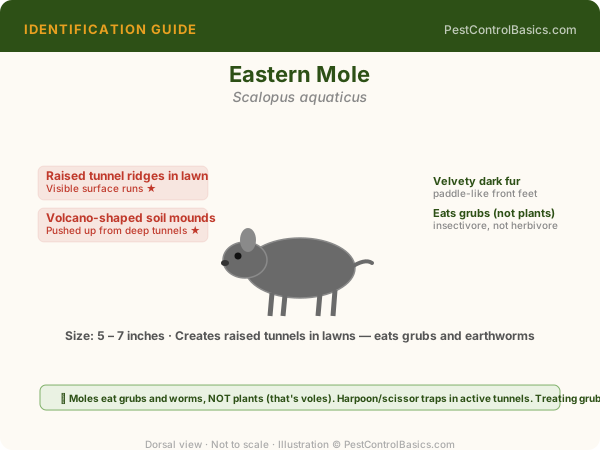
Mole (Scalopus aquaticus) identification illustration with labeled anatomical features — PestControlBasics.com

Original illustration by PestControlBasics.com. Use anatomical labels above to confirm your identification.

🔍 Identification Photo

Use this photo to confirm your identification. Click to enlarge. Correct ID is the essential first step to effective treatment.

Eastern mole (Scalopus aquaticus) — paddle-like front feet, velvety gray fur, pointed snout, vestigial eyes; creates rai

Eastern mole (Scalopus aquaticus) — paddle-like front feet, velvety gray fur, pointed snout, vestigial eyes; creates raised surface feeding tunnels

📷 Wikipedia / Wikimedia Commons / CC BY-SA

⚠️ Photo loaded live from Wikipedia/Wikimedia Commons (CC BY-SA). Appearance varies by region, age, and sex. When uncertain, contact a licensed pest professional.

Biology

What moles actually eat — and why it matters

The most persistent mole myth: that they eat garden bulbs and plant roots. They don't. Moles are insectivores — their diet is almost entirely earthworms, supplemented with beetle grubs and other soil invertebrates. Their saliva contains a toxin that paralyzes earthworms, allowing moles to store live worms in underground "larders."

If your tulip bulbs are disappearing, your garden plants are dying from root damage, or you're seeing surface runways through the lawn — that's voles, not moles. Treating for moles when you have voles is a complete waste of time and money.

Why healthy lawns attract moles: A well-maintained, well-irrigated lawn with good organic matter has an excellent earthworm population. More earthworms = more moles. Moles are actually a sign of good soil biology, which is cold comfort when your lawn looks like a battlefield.

Feeding tunnels vs. main tunnels: The fresh raised ridges you see appearing after rain are shallow feeding tunnels — used once or twice to hunt earthworms near the surface. Main travel tunnels are deeper and reused daily. Trapping in feeding tunnels is largely ineffective. Find and trap main tunnels.

The Macabee Trap

Finding main tunnels and setting the trap correctly

Finding main tunnels: Press down a section of each raised ridge firmly with your foot. Check back in 24 hours. Sections that re-raise are active main tunnels — the mole is clearing the blockage daily. Sections that stay flat are abandoned. Focus all trap effort on re-raised sections.

Macabee placement: Dig into the tunnel just enough to set the trap inside it — the trigger plates sit in the tunnel floor. Set two traps back-to-back facing in opposite directions (the mole approaches from either direction). Cover the opening with soil and a board to block light — moles avoid light and will push through to clear their tunnel, triggering the trap.

Check every 24 hours: Macabee traps are designed to catch and hold — the mole won't decompose the way it would in a snap trap, but daily checking is still best practice.

Grub control: Apply imidacloprid (Scott's GrubEx or similar) in May–June to reduce white grub populations. This reduces the mole food supply and makes the property less attractive after trapping eliminates the current population. It won't solve an active mole problem but reduces re-infestation pressure long-term.

💡 Repellents — Temporarily Effective, Not a Solution

Castor oil-based repellents (Mole-Max, Repellex) create an olfactory deterrent that causes moles to relocate — to adjacent untreated areas. They return when the treatment degrades. Repellents are useful for protecting specific high-value areas temporarily, not for eliminating mole populations.

Quick Reference
TypeInsectivore — NOT a rodent
Size5–7 inches
Front clawsEnormous, paddle-shaped
EyesTiny, nearly hidden under skin
NosePointed, pink, hairless
TunnelsRaised ridges (shallow) + deeper main runs
DietEarthworms, grubs, larvae — 70–100% body weight/day
NOT their damagePlants, bulbs, roots — that's voles
AI Bug Identifier →Find a Pro →
📚 Sources: EPA Termite Guide · NPMA Termite Info
Published: Jan 1, 2025 · Updated: Apr 7, 2026
Mole
Mole

Frequently Asked Questions

How do I know if I have Mole?

Signs of Mole include physical sightings, droppings or frass, damage to food or materials, and unusual odors. Inspect hidden areas like wall voids, behind appliances, and in storage spaces. A flashlight inspection after dark is often most revealing.

Are Mole dangerous to humans or pets?

Mole can pose health risks including bites, allergic reactions, food contamination, and disease transmission. Children, elderly, and pets are especially vulnerable. Consult a pest management professional when an infestation is confirmed.

Can I eliminate Mole myself?

Light infestations may be manageable with DIY baits, traps, and targeted treatments. Established infestations typically require professional intervention. Misapplied products often scatter pests and worsen the problem long-term.

How long does Mole treatment take?

Timelines vary by infestation size and method. Baits may take 1–4 weeks to work through a colony. Chemical treatments often require 2–3 applications spaced 2–4 weeks apart. Monitor for 30–60 days after treatment to confirm elimination.

What attracts Mole to my home?

Mole are typically drawn by food sources, standing moisture, warmth, and shelter. Sealing entry points, reducing clutter, fixing leaks, and storing food in airtight containers are the most effective long-term prevention measures.

Related Resources

📚 Full Pest Library🧪 DIY vs. Pro Quiz💰 Cost Guide🌿 IPM Guide🔍 Find a Pro
🧪 Recommended Treatment Products
Rodenticide Comparison Bromethalin Zinc Phosphide IPM Guide
Full product guides with mixing rates and safety info. → Browse All 130 Pesticide Guides
🔮
Reviewed by Derek GiordanoContent on PestControlBasics.com is developed with input from certified pest management professionals and cross-referenced against EPA, CDC, and university extension guidance. Last reviewed: April 2026.

🗺️ US Distribution — Mole

image/svg+xml
Common Occasional Not Present
States Present
49
Occasional
2
Primary Region
Continental US
📊 Source: University extension services, USDA, CDC vector data, and published entomological surveys.