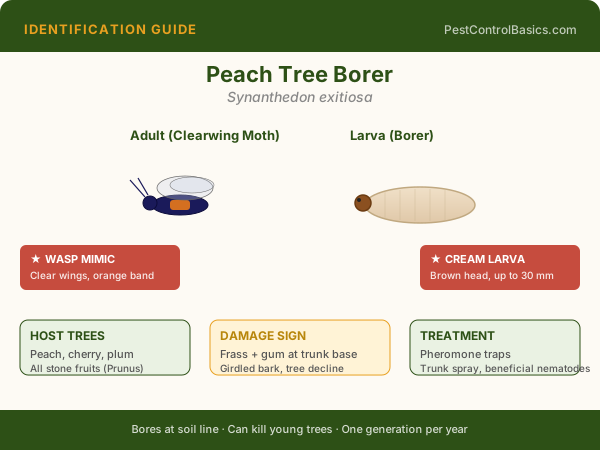
Illustrated identification guide — PestControlBasics.com
🔍 Identification
Greater Peachtree Borer: Damage at trunk base and roots (crown area and below soil line). Gummy mass with frass at the base. Most destructive — girdling at the crown kills young trees in 1-2 seasons.
Lesser Peachtree Borer: Damage in upper trunk and scaffold branches, usually associated with pruning wounds, cankers, or previous injury. Gummy mass and frass at wound sites.
Adults (both): clearwing moths that closely mimic wasps — blue-black with orange markings. Day-flying in summer.
🧬 Biology & Behavior
Both species overwinter as partially developed larvae inside the tree, completing development in spring and early summer. Adult females seek out host trees by olfaction in July-August, laying eggs on bark at the appropriate location (crown for greater, wounds for lesser). Treatment must reach the egg and newly hatched larva before it enters the bark.
⚠️ Damage & Health Risk
Tree girdling and death (greater); dieback of scaffold branches from lesser; severe economic losses in peach and cherry orchards; young trees most vulnerable to greater peachtree borer.
🔧 DIY Treatment
Apply permethrin or chlorpyrifos spray to the trunk from July through September when adults are laying eggs. Greater: spray from soil line up 18 inches. Lesser: spray the entire scaffold and trunk. Pheromone traps confirm adult flight periods for precise timing.
👷 When to Call a Pro
Commercial orchards use pheromone mating disruption for both species — reducing adult mating success across an entire orchard without insecticide applications.