πŸ› Peachtree Borer Complex

Synanthedon exitiosa / S. pictipes Β· Lepidoptera: Sesiidae

Two clearwing moth borers attack peaches and stone fruit β€” one at the root crown (greater), one in the upper scaffold branches (lesser). Identifying which you have changes where you apply treatment.

BorerLepidopteraFruit TreePeachSesiidaeStone Fruit
πŸ›
Risk Level
Fruit Tree Pest
πŸ”¬
PestControlBasics Editorial Team
Reviewed by Derek Giordano Β· Updated 2026
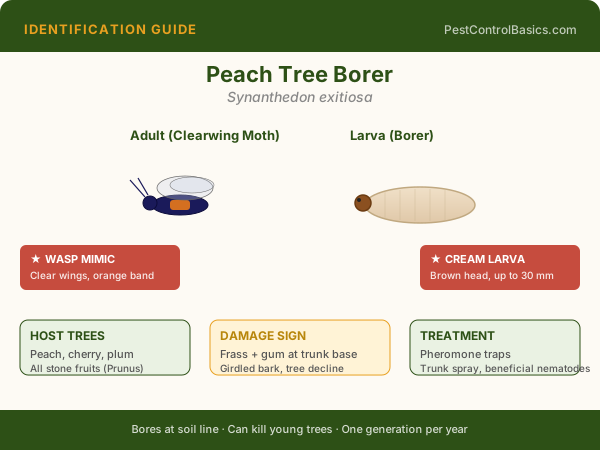
Peach Tree Borer identification guide illustration

Illustrated identification guide β€” PestControlBasics.com

πŸ” Identification

Greater Peachtree Borer: Damage at trunk base and roots (crown area and below soil line). Gummy mass with frass at the base. Most destructive β€” girdling at the crown kills young trees in 1-2 seasons.

Lesser Peachtree Borer: Damage in upper trunk and scaffold branches, usually associated with pruning wounds, cankers, or previous injury. Gummy mass and frass at wound sites.

Adults (both): clearwing moths that closely mimic wasps β€” blue-black with orange markings. Day-flying in summer.

🧬 Biology & Behavior

Both species overwinter as partially developed larvae inside the tree, completing development in spring and early summer. Adult females seek out host trees by olfaction in July-August, laying eggs on bark at the appropriate location (crown for greater, wounds for lesser). Treatment must reach the egg and newly hatched larva before it enters the bark.

⚠️ Damage & Health Risk

Tree girdling and death (greater); dieback of scaffold branches from lesser; severe economic losses in peach and cherry orchards; young trees most vulnerable to greater peachtree borer.

πŸ”§ DIY Treatment

Apply permethrin or chlorpyrifos spray to the trunk from July through September when adults are laying eggs. Greater: spray from soil line up 18 inches. Lesser: spray the entire scaffold and trunk. Pheromone traps confirm adult flight periods for precise timing.

πŸ‘· When to Call a Pro

Commercial orchards use pheromone mating disruption for both species β€” reducing adult mating success across an entire orchard without insecticide applications.

❓ FAQ

How do I know which borer I have?
Location of damage tells you: gummy mass at the base of the trunk at soil level or below = greater peachtree borer. Gummy mass on the upper trunk or scaffold branches, often near wounds or branch crotches = lesser peachtree borer.
Can I save a tree with peachtree borer damage?
For actively-infested trees caught early (gummy mass present but tree not severely girdled): probe the entry site with a wire to find and kill the larva physically, treat the wound with pruning sealer, and apply preventive trunk spray. Trees with complete girdling at the crown cannot be saved.
🧪 Recommended Treatment Products
Bifenthrin Carbaryl (Sevin) Beneficial Nematodes IPM Guide Imidacloprid (Systemic)
Full product guides with mixing rates and safety info. → Browse All 130 Pesticide Guides
πŸ“š Sources: EPA Safe Pest Control Β· NPMA Pest Guide
Published: Jan 1, 2025 Β· Updated: Apr 7, 2026

πŸ—ΊοΈ US Distribution β€” Greater Peachtree Borer & Lesser Peachtree

image/svg+xml
Common Occasional Not Present
States Present
49
Occasional
2
Primary Region
All agricultural regions
πŸ“Š Source: University extension services, USDA, CDC vector data, and published entomological surveys.