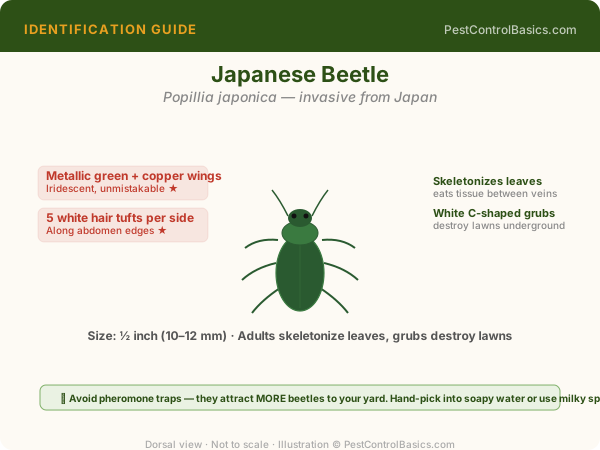
Original illustration by PestControlBasics.com. Use anatomical labels above to confirm your identification.
🔍 Identification
Adults: 15-30mm; brownish-grey; extremely long antennae (often 1.5-2x body length); mottled pattern. Found on dead or dying pines; frequently at porch lights; commonly emerge from firewood. Their large size and long antennae make them among the most distinctive beetles encountered. The round exit holes (6-12mm) in pine wood confirm their development there.
🧬 Biology & Behavior
Pine sawyers are among the first colonizers of recently dead or severely stressed pines. They play a critical ecological role in the decomposition of dead pine wood. Important note: they're vectors of the pinewood nematode (Bursaphelenchus xylophilus), which causes pine wilt disease — the nematode hitchhikes in the beetle's body and is transmitted when beetles feed on new shoot tissue of healthy pines.
⚠️ Damage & Health Risk
No damage to healthy trees (they attack only dead or dying wood). Cosmetic: large round exit holes in firewood or structural wood from which they developed. Vector potential for pinewood nematode in regions where pine wilt is a concern.
🔧 DIY Treatment
No treatment needed for pine sawyers themselves — they develop in wood that was already dead. Bring firewood inside only 24-48 hours before burning (beetles emerge when warmed). If found in a structure, they did not infest the structural wood in sound condition — they emerged from previously infested wood that was incorporated into the structure.
👷 When to Call a Pro
Never warranted alone — pine sawyers cannot establish in sound structural wood.