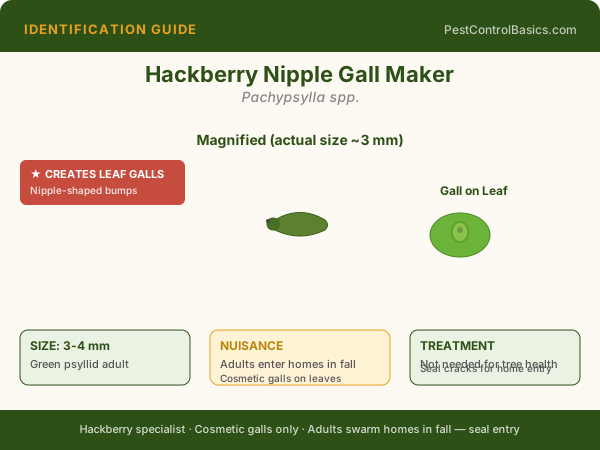
Illustrated identification guide — PestControlBasics.com
🔍 Identification
Adults: 2-3mm; tan to brown; large hind legs; jump readily when disturbed — often mistaken for fleas. Found near hackberry trees (Celtis species) in September-October. The diagnostic: hackberry nipple galls on leaves — round bumps on the upper leaf surface, each caused by a psyllid nymph inside.
🧬 Biology & Behavior
Develop inside the distinctive nipple galls on hackberry leaves through summer. Adults emerge in fall and aggregate on warm surfaces (south-facing windows, light-colored walls) seeking overwintering sites — drawn to warmth. They enter through any gap.
⚠️ Damage & Health Risk
Nuisance aggregation; indoor entry through window screens (they're small enough to pass through standard mesh); jumping behavior causes flea alarm; no biting, no damage, no breeding indoors.
🔧 DIY Treatment
September bifenthrin spray on south-facing walls and window frames. Seal window screen gaps. Reduce exterior lighting. Indoor individuals die naturally — vacuum. No persistent infestation possible without hackberry hosts.
👷 When to Call a Pro
Rarely warranted for this species alone.