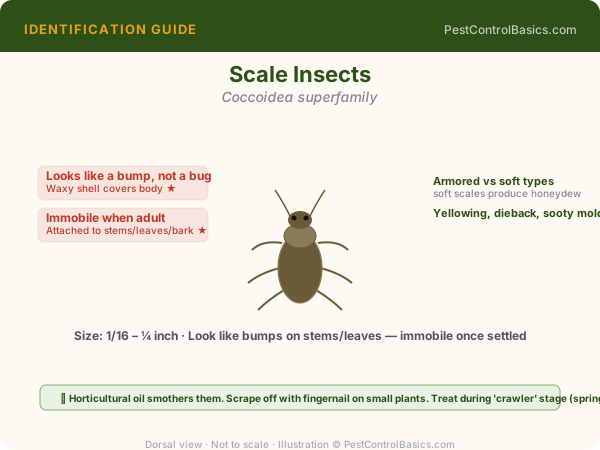
Original illustration by PestControlBasics.com. Use the labeled features above to confirm your identification.
🔍 Identification
Armored scales (Diaspididae): Flat, waxy shield that can be lifted off the living insect beneath. Many species. Oystershell scale, San Jose scale, euonymus scale are common examples. Don't produce honeydew.
Soft scales (Coccidae): Rounded, waxy covering integral to the insect's body. Brown soft scale, cottony maple scale common examples. Produce large amounts of honeydew.
Often mistaken for disease lesions or bark features by homeowners.
🧬 Biology & Behavior
All scale insects are sedentary — adult females never move. They insert stylet mouthparts into plant tissue and feed on phloem sap. Young crawlers (mobile 1st instars) move to new locations before settling and producing their protective covering.
⚠️ Damage & Health Risk
Yellowing, wilting, and dieback of stems; sooty mold growth on honeydew (soft scales); premature leaf drop; in severe infestations, branch dieback and plant death.
🔧 DIY Treatment
Horticultural oil: Most effective treatment. Apply dormant oil spray in late winter before crawler emergence; summer oil for active infestations. Smothers insects and eggs. Safe for most plants.
Systemic insecticides: Imidacloprid soil drench (Bayer Tree & Shrub) kills feeding scales systemically. Avoid on flowering plants.
Mechanical removal: Scrub small infestations with soft brush and dilute dish soap.
👷 When to Call a Pro
For large trees with severe scale infestations, professional application of systemic trunk injections is most effective.