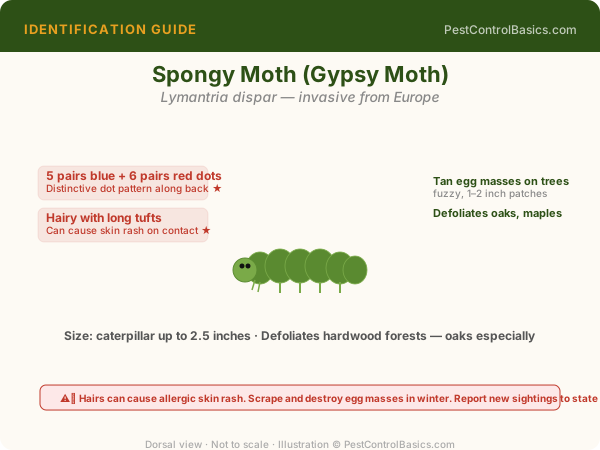
Original illustration by PestControlBasics.com. Use the labeled features above to confirm your identification.
🔍 Identification
Egg masses: tan/buff, sponge-textured masses of 100-1,000 eggs on bark, furniture, vehicles — these are how the pest spreads. Caterpillars: mature to 60mm; distinctive pairs of blue dots (5 pairs) and red dots (6 pairs) down the back. Male adults: brownish-grey with dark wavy bands. Female adults: white with black markings; flightless.
🧬 Biology & Behavior
Invasive from Europe; first established in Massachusetts in the 1860s. Spreads via egg masses transported on vehicles, firewood, and outdoor furniture. Quarantines exist in heavily infested areas. Hosts: oak is primary; also birch, apple, alder, willow. Complete defoliation of oaks causes significant tree stress; repeated defoliation kills trees.
⚠️ Damage & Health Risk
Complete defoliation of deciduous trees in severe outbreak years; caterpillar frass 'raining' from tree canopy; caterpillars covering structures; allergic reactions in some people from contact with caterpillar hairs.
🔧 DIY Treatment
Egg mass removal: scrape egg masses into soapy water in fall/winter. Burlap band traps: wrap burlap around tree trunk in June-July — caterpillars shelter under it; check daily and kill them. Bt (Bacillus thuringiensis var. kurstaki): spray when caterpillars are small (1/2 inch). Horticultural oil: apply to egg masses before hatch. Diflubenzuron (Dimilin): effective chitin synthesis inhibitor applied by air or ground during outbreaks.
👷 When to Call a Pro
For property-wide tree protection during outbreak years, professional aerial or ground Bt application provides the most effective coverage.