Illustrated identification guide — PestControlBasics.com
🔍 Identification
Adults (July-December): 25mm body; grey forewing with black spots; hindwing brilliant red/black with white band — stunning appearance when wings are open. Nymphs (April-July): Early instars: black with white spots. 4th instar: red with black/white spots. Egg masses: pale brown, putty-like coating on flat surfaces — look like dried mud smear; 30-50 eggs each.
🧬 Biology & Behavior
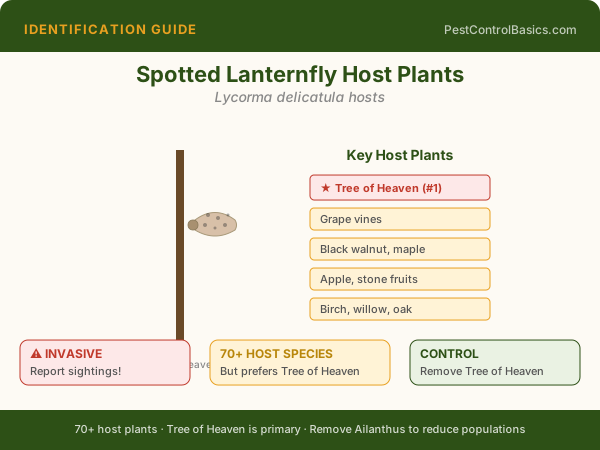
Invasive from Asia; first detected in Berks County, Pennsylvania in 2014. Spreads primarily by attaching egg masses to vehicles, outdoor equipment, and materials. Established in PA, NJ, NY, DE, MD, VA, WV, CT, OH, IN, MI, NC, RI, MA, and more. Quarantine zones restrict movement of materials from infested counties. Host plants: Tree of Heaven (primary), grapes, hops, apples, peaches, cherries, hardwood trees.
⚠️ Damage & Health Risk
Direct: weakens host plants by sucking phloem sap. Indirect: massive honeydew production supports sooty mold. Established economic damage to vineyards, orchards, and Christmas tree farms. Estimated $50+ million annual impact to Pennsylvania agriculture alone.
🔧 DIY Treatment
Kill adults and nymphs on sight. Scrape and destroy egg masses (late September-June) — put scraped eggs in rubbing alcohol or hand sanitizer, not just on the ground. Systemic imidacloprid or dinotefuran bark treatments protect individual high-value trees. Remove or treat Tree of Heaven (primary host) near structures.
👷 When to Call a Pro
Commercial orchards and vineyards require integrated IPM programs following state guidelines. Report new county detections to your state department of agriculture — this is legally required in quarantine states and critically important for tracking spread.