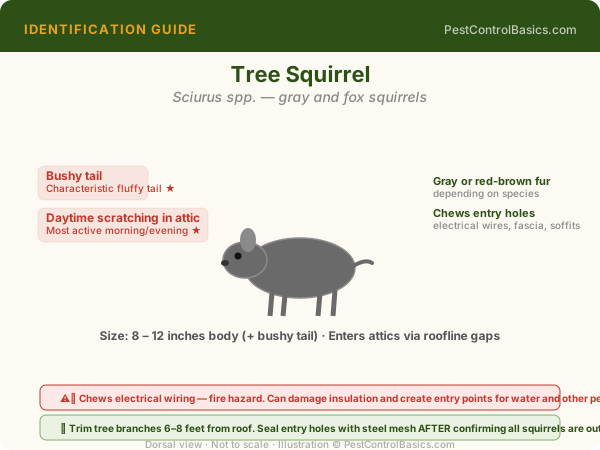
Original illustration by PestControlBasics.com. Use the labeled features above to confirm your identification.
🔍 Identification
Much smaller than gray squirrels: 120-170mm body; large dark eyes (adapted for night vision); prominent skin membrane (patagium) between front and back legs — the gliding membrane. Rarely seen during daylight hours. Listen for rapid scurrying and chittering sounds in attic 1-3 hours after sunset. Gray squirrels are active in daytime; flying squirrels after dark.
🧬 Biology & Behavior
Unlike gray squirrels (typically 1-2 per nesting site), flying squirrels form communal colonies of 5-20+ individuals that den together, especially in winter. They glide from trees to structures — entry points include gaps near roofline, soffit junctions, and gable vents. They're faster and more agile than gray squirrels.
⚠️ Damage & Health Risk
Insulation damage from nesting material and urine; noise disturbance (nocturnal activity); ectoparasite introduction (tropical rat mites, fleas); gnawing on electrical wires; potential rabies vector (though not commonly).
🔧 DIY Treatment
Same exclusion approach as gray squirrels but more challenging due to colony size and smaller entry gaps. Install one-way exclusion devices at all entry points outside nesting season. Seal ALL gaps 1 inch or larger — flying squirrels need less clearance than gray squirrels. Check gable vent screens carefully.
👷 When to Call a Pro
Wildlife control professionals are recommended for flying squirrel colonies — finding and sealing all entry points for a colony of 10-20 squirrels requires thorough inspection that's difficult without experience.