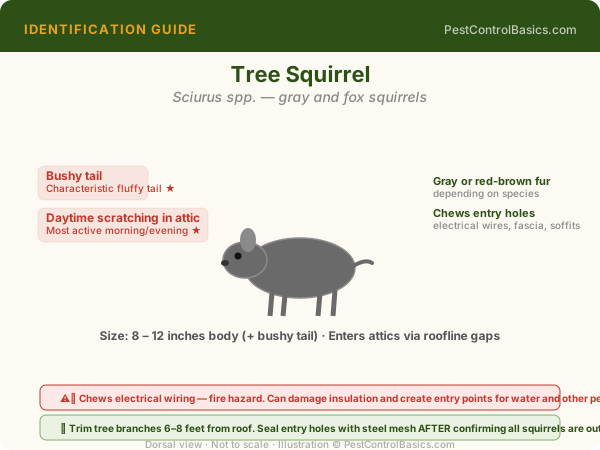
Original illustration by PestControlBasics.com. Use the labeled features above to confirm your identification.
🔍 Identification
Eastern Gray Squirrel (Sciurus carolinensis) is the primary attic invader in Eastern US. Fox Squirrels (Sciurus niger) in Midwest/South. Flying squirrels (Glaucomys volans) in eastern forests — identified by nocturnal activity and gliding ability.
Entry holes: Typically 2-3 inches in diameter. Look for: gable vents with damaged screens, soffits with gnawed openings, roof-to-fascia junctions, and any point where tree branches overhang within 8-10 feet of the roofline.
Signs of squirrels (not rats): Activity during daylight hours (gray squirrels are diurnal); gnawing sounds in morning and late afternoon; larger droppings than rats (oblong, 8-10mm).
🧬 Biology & Behavior
Squirrels are seasonal nesters — they use attics most heavily in fall/winter and during two breeding seasons (Jan-Feb and June-July). Females give birth to 2-8 young twice yearly and will aggressively defend nesting sites.
Critical: Never seal entry points during breeding season (Jan-Feb, June-July) or you risk trapping juveniles inside who will die — and their decomposition creates serious odor issues.
⚠️ Damage & Health Risk
Gnawed wiring (fire hazard — this is the most serious risk), damaged insulation, soiled insulation with urine and feces, entry hole enlargement, structural damage to fascia and soffit boards, and contamination with parasites (fleas, ticks, mites).
🔧 DIY Treatment
Step 1 — Identify ALL entry points from outside. Use binoculars; look for gnaw marks, flattened hair, grease marks, and debris around openings.
Step 2 — One-way exclusion doors: Install one-way doors over all entry points (except one) allowing squirrels to exit but not re-enter. Leave up for minimum 3-7 days.
Step 3 — After confirmed departure, seal the final hole with hardware cloth (1/4-inch galvanized) + caulk or flashing.
Step 4 — Preventive exclusion: Trim all branches to 10+ feet from roofline. Install squirrel baffles on any downspouts or climbing surfaces.
👷 When to Call a Pro
Call a licensed wildlife control operator if: you have juveniles in the nest, the entry points are in inaccessible areas (high peaks, complex rooflines), or if re-entry continues after attempted exclusion. In most states, squirrels are protected wildlife with specific rules about trapping and relocation.