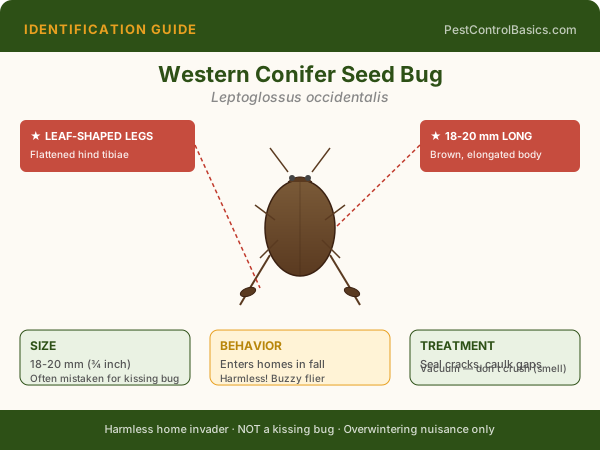
Illustrated identification guide — PestControlBasics.com
🔍 Identification
Adults: 16-20mm — larger than stink bugs; brown with a distinctive white zigzag line across the middle of the wings; hind legs have leaf-like expansion (the 'squash bug family' look). When flying indoors: loud, clumsily buzzing flight that sounds alarming. No distinctive odor when disturbed (unlike true stink bugs).
🧬 Biology & Behavior
Native to western North America; has spread eastward and to Europe. Feeds on conifer seeds — pine, Douglas fir, hemlock. Not damaging to trees at typical population levels. Seeks overwintering sites in fall by aggregating on warm sun-facing walls, exactly like stink bugs. Range expanding rapidly eastward.
⚠️ Damage & Health Risk
Nuisance fall invasion; loud buzzing when disturbed; occasional defensive secretion but less pronounced than stink bugs. No structural damage, no indoor breeding.
🔧 DIY Treatment
Identical management to stink bugs: September perimeter spray, seal exterior gaps, vacuum indoor individuals. They're not aggressive and no special treatment approach is needed beyond standard fall invader protocol.
👷 When to Call a Pro
Rarely warranted — standard fall perimeter service call covers western conifer seed bugs alongside stink bugs and boxelder bugs.