🏷️ Brand Names — Same Active Ingredient
🎯 Target Pests
🔬 How It Works
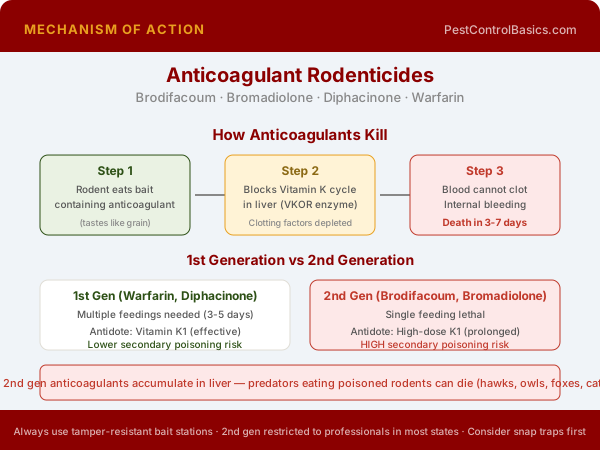
Diphacinone is a first-generation anticoagulant — the original class of anticoagulant rodenticides. It requires multiple feedings over several days to achieve a lethal dose, unlike second-generation anticoagulants (bromadiolone, brodifacoum) where a single feeding is sufficient.
Lower secondary poisoning risk: Because diphacinone requires multiple feedings and is metabolized more rapidly, the risk of secondary poisoning to raptors, pets, and predators is significantly lower than second-generation products. Many integrated pest management programs prefer diphacinone precisely because of this.
⚗️ Mixing & Application Rates
Ready-to-use. Tracking powder formulations (0.1%) are restricted-use in many applications — verify state requirements.
⚠️ Safety & Precautions
- Lower secondary poisoning risk than bromadiolone or brodifacoum — a key advantage in wildlife-sensitive areas
- Antidote: Vitamin K1 (same as all anticoagulants)
- Tamper-resistant bait stations required for outdoor use
- Tracking powder formulations (0.1%) require additional PPE and applicator precautions
- Keep away from children and non-target animals
📄 SDS / Label Resources
Ditrac SDS available from Bell Labs. Ramik products SDS available from Motomco. For tracking powder formulations, additional hazard information applies — obtain SDS before purchasing.