πŸ€ Norway Rat β€” Complete Elimination Guide

Rattus norvegicus Β· Rodentia: Muridae

Norway rats cause billions in damage annually and carry multiple disease vectors. If you have rats at ground level or in your basement, it's almost certainly Norway rats.

RatRodentBurrowDisease VectorStructural DamageMuridae
πŸ€
Risk Level
Disease / Structural Risk
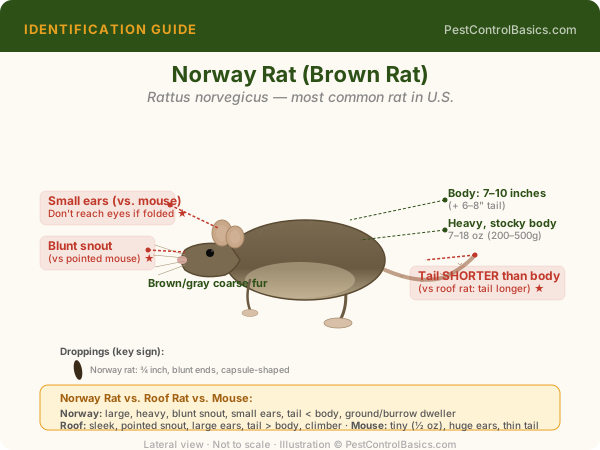
πŸ“ FIELD GUIDE ILLUSTRATION
Norway rat (Rattus norvegicus) identification illustration with labeled anatomical features β€” PestControlBasics.com

Original illustration by PestControlBasics.com. Use anatomical labels above to confirm your identification.

πŸ”¬
PestControlBasics Editorial Team
Reviewed by Derek Giordano Β· Updated 2026

πŸ” Identification

Adult: 300-500g; blunt snout; small ears; tail shorter than body; coarse brown fur. Droppings: 12-20mm, capsule-shaped with blunt ends. Burrows: 2-3 inch diameter entrance holes near foundations, under slabs, and along fence lines. Rub marks (greasy smears) along wall bases indicate travel routes.

🧬 Biology & Behavior

Primarily ground-level and subterranean β€” burrow extensively near structures. Excellent swimmers. Colonies range 100-300 feet. Females produce 3-6 litters/year of 6-12 young. Neophobic (fear of new objects) β€” traps may need to be placed for several days before being triggered.

⚠️ Damage & Health Risk

Structural gnawing including wires (fire hazard); food contamination; foundation burrowing; leptospirosis, rat-bite fever, salmonellosis transmission; flea transport.

πŸ”§ DIY Treatment

Victor rat snap traps placed perpendicular to walls along run marks. Exterior bait stations around the perimeter. Complete exclusion: copper mesh + caulk at all gaps 1/2 inch or larger. Focus on foundation pipe penetrations, sill plate gaps, and utility entry points.

πŸ‘· When to Call a Pro

For severe infestations, professional PCOs provide more comprehensive exclusion and have access to restricted rodenticide products.

❓ FAQ

How do I tell Norway rats from roof rats?
Norway rat: blunt snout, small ears, tail shorter than body, larger/heavier, found at ground level. Roof rat: pointed snout, large ears, tail longer than body, agile climber, found in attics. Droppings with blunt ends = Norway rat; pointed ends = roof rat.
How fast do Norway rats reproduce?
A single breeding pair can produce 40-60 offspring in one year. Those offspring begin reproducing at 2-3 months of age. Without control, populations grow rapidly β€” emphasizing why prompt action matters.

πŸ—ΊοΈ Geographic Range & Distribution

FactorDetails
U.S. RangeAll 50 states
Regional DetailNorway rat: nationwide in urban areas. Roof rat: Southeast, Gulf Coast, Pacific Coast. Most active fall through spring.

πŸ“… Treatment Timing Guide

Treating at the right time dramatically improves results. Pest control timed to the life cycle uses less product and achieves better long-term control.

PeriodAction
SpringInspection and perimeter treatment before pest season starts.
SummerActive monitoring and targeted treatments as needed.
FallPreventive treatment before overwintering pests seek entry.

πŸ’° Professional Treatment Costs

Service TypeDIY CostProfessional Cost
Initial inspectionFree (self-inspect)$75–$150 (often credited to treatment)
One-time treatment$30–$100 in materials$150–$500
Annual service contractN/A$400–$900/year
Severe infestationOften ineffective alone$500–$2,500+

Prices vary by region, property size, and infestation severity.

❓ Common Questions About πŸ€ Norway Rat β€” Complete Elimination Guide

How do I confirm I actually have this pest (not something similar)?
The most reliable confirmation is a physical specimen β€” capture one and compare to reference images on this page. For cryptic pests (bed bugs, termites), look for secondary signs: frass, shed skins, mud tubes, or bites with a specific pattern. When uncertain, a professional inspection is faster than months of misidentification.
Can I treat this myself or do I need a professional?
DIY is effective for small, accessible infestations caught early. Professionals are worth the cost when: the infestation is inside wall voids or structural elements, multiple rooms are affected, you have health-risk pests (hantavirus, venomous species), or DIY has already failed twice.
How long until the infestation is completely gone?
Expect 3–8 weeks for most infestations with proper treatment. Insects with dormant life stages (pupae, eggs) extend the timeline because those stages are impervious to most insecticides. Follow-up treatments at 2 and 4 weeks catch each new cohort as they emerge.
What's the most common mistake people make treating this pest?
Treating only the visible pest population while ignoring the harborage site, entry point, or breeding location. Killing adults provides temporary relief but the population rebuilds from hidden egg cases, pupae, or new arrivals through unaddressed entry points.
πŸ“š Sources: CDC Rodent Control Β· EPA Rodenticide Safety
Published: Jan 1, 2025 Β· Updated: Apr 7, 2026

πŸ—ΊοΈ US Distribution β€” Norway Rat

image/svg+xml
Common Occasional Not Present
States Present
51
Occasional
0
Primary Region
All 50 states (indoor pest)
πŸ“Š Source: University extension services, USDA, CDC vector data, and published entomological surveys.