πŸ”’ Licensed Only Active: diphacinone

Diphacinone β€” Ditrac, Ramik

Diphacinone is a first-generation anticoagulant rodenticide in Ditrac and Ramik. Slower than second-gen products but lower secondary poisoning risk. Complete guide.

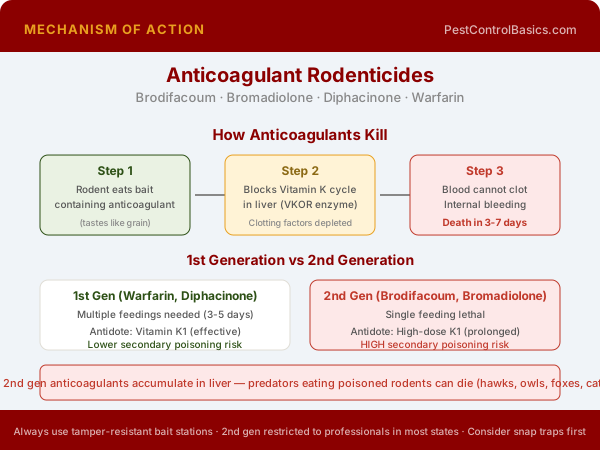
Rodenticide Anticoagulant mechanism of action diagram

How rodenticide anticoagulant works β€” illustrated mechanism of action

πŸ“‹ Safety Data Sheet (SDS)

πŸ“„

Diphacinone β€” Safety Data Sheet

The SDS document preview will appear here once the first-page image is uploaded to your server.

πŸ“Ž To display the SDS preview:
1. Open the SDS PDF for this product
2. Screenshot or export page 1 as a JPG image
3. Upload to /sds/diphacinone-sds-page1.jpg
4. The image will display automatically here
πŸ“„ Search for this SDS on CDMS β†’
πŸ“„ Diphacinone β€” Safety Data Sheet Β· View the complete SDS document above or download below
βš–οΈ Educational use only. PestControlBasics.com is not a licensed PCO. The label is the law under FIFRA. Always read your complete product label before mixing or applying. Full disclaimer β†’ | βš—οΈ Mixing Calculator β†’

🏷️ Brand Names β€” Same Active Ingredient

⚠️ Don't buy duplicates. All products below contain diphacinone as the active ingredient. Buying two different brands is buying the same pesticide twice β€” they differ only in price, concentration, and formulation type.
Ditrac All-Weather Blox
Bell Labs Β· Bait block Β· 0.005% diphacinone
Professional
Ramik Brown Pellets SAME ACTIVE INGREDIENT
Motomco Β· Pellet bait Β· 0.005% diphacinone
Consumer/Professional
Ramik Mini Bars SAME ACTIVE INGREDIENT
Motomco Β· Bait bar Β· 0.005% diphacinone
Consumer/Professional
Ditrac Tracking Powder
Bell Labs Β· Tracking powder Β· 0.1% diphacinone
Professional β€” CAUTION

🎯 Target Pests

βœ“Norway Ratβœ“Roof Ratβœ“House Mouseβœ“Volesβœ“Ground Squirrels (some formulations)

πŸ”¬ How It Works

Diphacinone is a first-generation anticoagulant β€” the original class of anticoagulant rodenticides. It requires multiple feedings over several days to achieve a lethal dose, unlike second-generation anticoagulants (bromadiolone, brodifacoum) where a single feeding is sufficient.

Lower secondary poisoning risk: Because diphacinone requires multiple feedings and is metabolized more rapidly, the risk of secondary poisoning to raptors, pets, and predators is significantly lower than second-generation products. Many integrated pest management programs prefer diphacinone precisely because of this.

βš—οΈ Mixing & Application Rates

Ready-to-use. Tracking powder formulations (0.1%) are restricted-use in many applications β€” verify state requirements.

Rat control β€” bait stations
4–8 blocks per station
Requires multiple feedings β€” maintain fresh bait continuously for at least 2 weeks. Replace any bait that becomes wet, moldy, or contaminated. Lower secondary poisoning risk than second-gen products.
Mouse control
1–3 blocks per station
Place stations every 8–12 feet along active runways. Requires 3–7+ days of feeding for lethal dose accumulation.
βš—οΈ
Need the exact mixing rate for your tank size?
Our interactive calculator handles any volume β€” backpack sprayer, skid unit, or hand sprayer.
Open Mixing Calculator β†’

⚠️ Safety & Precautions

  • Lower secondary poisoning risk than bromadiolone or brodifacoum β€” a key advantage in wildlife-sensitive areas
  • Antidote: Vitamin K1 (same as all anticoagulants)
  • Tamper-resistant bait stations required for outdoor use
  • Tracking powder formulations (0.1%) require additional PPE and applicator precautions
  • Keep away from children and non-target animals

πŸ“„ SDS / Label Resources

Ditrac SDS available from Bell Labs. Ramik products SDS available from Motomco. For tracking powder formulations, additional hazard information applies β€” obtain SDS before purchasing.

πŸ“„ CDMS Label Database πŸ›οΈ EPA Label Search
βš–οΈ Educational use only. PestControlBasics.com is not a licensed PCO. The label is the law under FIFRA. Always read your complete product label before mixing or applying. Full disclaimer β†’ | βš—οΈ Mixing Calculator β†’
πŸ“š Sources: EPA Pesticide Labels Β· NPIC Pesticide Info
Published: Jan 1, 2025 Β· Updated: Apr 7, 2026